Last Update on December 30, 2025
The year 2026 marks a decisive turning point for virtual reality. Driven by spectacular technological advances observed at the end of 2025, this technology is now establishing itself far beyond gaming. From spatial computing to neural interfaces, and the convergence with artificial intelligence, discover how 2026 virtual reality innovations are shaping today’s immersive landscape and the trends that will dominate the years to come.
The State of Virtual Reality in 2026: Beyond Gaming
The global virtual reality market reached a historic milestone at the beginning of 2026. According to the latest estimates consolidated in late 2025 by Statista, the sector now represents more than $80 billion, with an annual growth rate maintained at 32%. This spectacular expansion is explained by a massive diversification of professional and consumer uses.
Companies have massively adopted VR for immersive professional training. Simulations allow employees to train in ultra-realistic environments without risk. Sectors such as aeronautics, interventional medicine, and the nuclear industry have integrated these tools into their mandatory certification programs.
Education in virtual reality is also experiencing unprecedented adoption in European and international institutions. High schools and universities use virtual environments to teach history, molecular biology, or quantum physics interactively. Students can now explore faithful historical reconstructions or manipulate atomic structures in 3D.
The healthcare sector represents one of the most promising areas of application for 2026. Immersive therapies for the treatment of PTSD, phobias, and anxiety disorders have shown efficacy rates exceeding 78% according to recent clinical studies. Therapeutic virtual reality is establishing itself as a credible and less invasive alternative to traditional pharmacological treatments.
Major Hardware Innovations of 2026

The year 2025 was marked by an intense VR headset war between tech giants. This fierce competition has led to spectacular advances that define current industry standards in 2026.
Apple vs. Meta vs. New Entrants Comparison
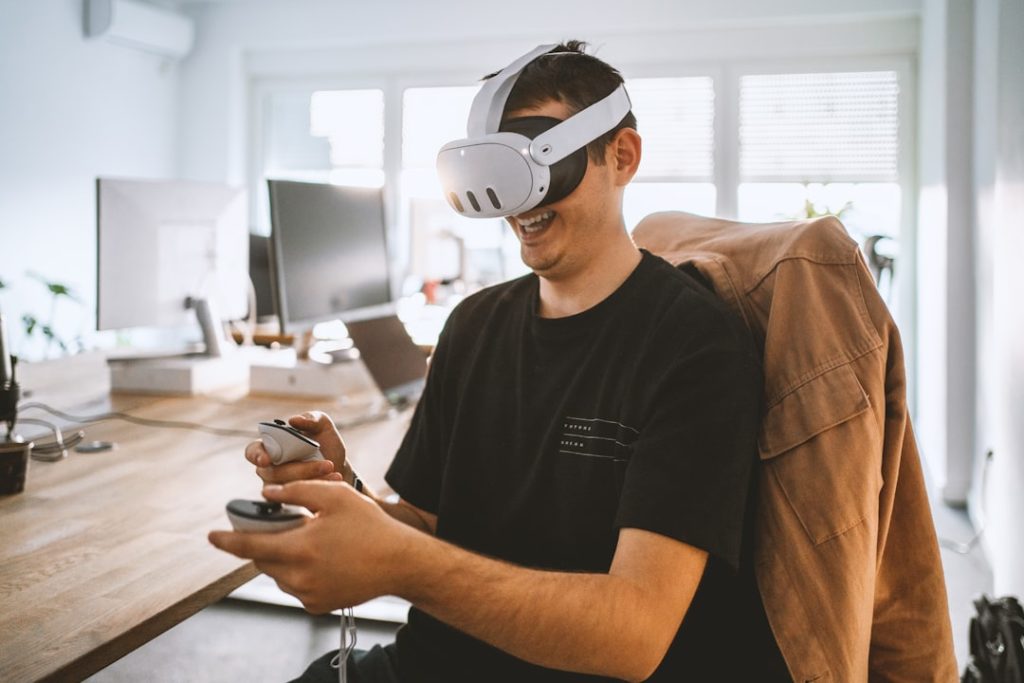
Meta has consolidated its dominant position with the Meta Quest 3 and the announcement of its successor planned for the second half of 2026. Mark Zuckerberg’s firm has bet on price accessibility and mixed reality to democratize consumer adoption. Improvements in high-definition color passthrough allow for a fluid and natural integration between the real and virtual worlds.
Apple has revolutionized the premium segment with the Apple Vision Pro and its major software updates deployed in late 2025. Its approach centered on spatial computing has redefined expectations for intuitive user interfaces. Millimeter-precision eye-tracking and exceptional retinal resolution have set new standards that the competition struggles to match.
New Asian entrants have disrupted the market with aggressive pricing. Pico, backed by ByteDance, offers competitive alternatives targeting the professional market with its Pico 5 Enterprise. Manufacturers like Pimax continue to innovate in the enthusiast segment with record combined resolutions exceeding 12K.
Key Technological Advances
Micro-OLED screen resolution has reached unprecedented heights in 2026. The latest headsets offer up to 4K per eye with pancake lens technology, virtually eliminating the screen door effect that used to hinder immersion. A 144Hz refresh rate has become standard on high-end models, significantly reducing motion sickness in VR.
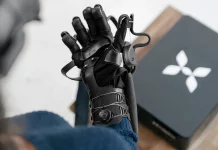
Advanced haptics are radically transforming the tactile experience. New controllers integrate sophisticated force-feedback motors allowing users to feel textures, virtual temperatures, and physical resistance. Consumer haptic gloves for under $300 are beginning to emerge, offering unprecedented immersion in professional and gaming applications.
Standalone VR headsets now dominate 75% of the market. Onboard computing power based on Snapdragon XR3 chips rivals gaming PCs from three years ago. This total autonomy finally frees users from the constraints of cables, base stations, and complex PC configurations.
AI and VR Convergence: The Generative Content Revolution
The integration of generative artificial intelligence into virtual reality constitutes the most disruptive transformation of 2026. This technological convergence fundamentally redefines the creation and consumption of immersive content at scale.
Real-Time Environment Creation
Spatial generative AI tools now allow for the creation of complex virtual environments from simple text or voice descriptions. A user can describe an enchanted forest with precise details, and the AI instantly generates an explorable world in photorealistic 3D. This democratization of creation transforms every user into a potential developer of virtual worlds.
NPCs (non-player characters) have gained realism thanks to large multimodal language models. Interactions in virtual worlds like VRChat are enriched by characters capable of natural, contextual, and emotionally consistent conversations. These AI avatars remember past interactions and develop evolving personalities.
Intelligent Adaptive Personalization
AI analyzes user behavior, biometric data, and preferences in real-time to dynamically adapt experiences. VR games automatically adjust their difficulty, narrative, and visual elements according to detected physiological reactions. This dynamic personalization maximizes engagement and user satisfaction.
Educational applications use AI to create hyper-personalized learning paths. Each student progresses in a virtual environment adapted to their cognitive pace, learning style, and areas of difficulty. Studies conducted in late 2025 show a 45% improvement in knowledge retention compared to traditional methods.
Societal and Professional Impacts of VR in 2026
The democratization of virtual reality is generating profound transformations in our relationship with work, leisure, and social interactions in this year 2026.
The Industrial Metaverse
Companies have invested heavily in the industrial metaverse since 2025. Digital twins allow for the simulation of entire factories, complex logistics chains, and critical infrastructure before construction or modification. Geographically dispersed teams collaborate in shared virtual spaces, reducing travel by 60% and accelerating product development cycles.
Ultra-realistic VR simulations have become essential in high-risk sectors. Pilots accumulate qualifying flight hours in VR, surgeons rehearse complex procedures on virtual patients, and nuclear power plant operators train for emergency procedures. Mistakes are made without consequence, allowing for optimal learning through experimentation.
Transformation of Leisure and Entertainment
VR gaming has reached impressive maturity in 2026. Titles like Beat Saber and its successors have proven that VR can create unique experiences impossible to replicate on traditional screens. The best VR games now rival traditional AAAs in terms of production, lifespan, and studio investment.
Social VR is transforming long-distance interactions. Platforms like Rec Room and Bigscreen VR allow for sharing authentic experiences with distant loved ones. Watching a movie in VR with friends scattered around the world is becoming a common practice, recreating the shared cinema experience.
Ethical and Health Issues
The massive adoption of VR raises major ethical questions in 2026. Experts warn of the risks of addiction to virtual worlds and social isolation. Adolescents spending more than 4 hours daily in VR show symptoms of disconnection from physical reality according to several European studies.
The ecological cost of VR is also a subject of debate. The manufacturing of headsets, the energy consumption of data centers supporting virtual environments, and the planned obsolescence of devices raise concerns. Initiatives are emerging to develop modular and recyclable headsets, responding to growing environmental concerns.
On the health front, the long-term effects of prolonged exposure to screens very close to the eyes are still being studied. Manufacturers now integrate automatic break alerts and advanced eye protection modes to limit visual fatigue.
The Future of Immersion: 2026-2030 Trends
The innovations of 2026 foreshadow even more radical transformations for the end of the decade. Research labs and tech giants are actively preparing for the next immersive revolutions.
Neural Interfaces
Non-invasive neural interfaces are progressing rapidly. Consumer EEG headbands already allow for controlling certain VR functions by thought. By 2028, experts predict systems capable of interpreting complex intentions, gradually eliminating the need for physical controllers.
Neuralink and its competitors are developing brain implants that could, eventually, offer total immersion by directly stimulating the sensory areas of the brain. These technologies, however, raise intense ethical debates about the limits that should not be crossed.
6G and Ultra-Latency
The first experimental deployments of 6G promise latencies of less than 1 millisecond. This ultra-responsiveness will allow for streaming complex VR environments from the cloud without any perceptible lag. Headsets could become simple lightweight screens, with all computing power being offloaded.
This evolution will democratize access to the most demanding VR experiences. No more need for expensive gaming PCs or headsets with powerful onboard processors: a 6G connection will be enough to enjoy photorealistic environments in real-time.
Convergence with Augmented Reality
The boundary between mixed reality, augmented reality, and virtual reality is gradually blurring. Future devices will offer a fluid continuum between total immersion and the overlay of digital elements on the real world. Lightweight everyday glasses will offer both modes as needed.
This convergence will open up unprecedented hybrid uses: 3D GPS navigation overlaid on real vision, instant translation displayed on foreign interlocutors, or contextual information enriching every observed object.
Practical Guide: Getting Started in VR in 2026
For newcomers wishing to discover virtual reality, 2026 offers a particularly favorable entry point thanks to market maturity and the diversity of offerings.
Choosing Your Equipment
The choice of headset mainly depends on the budget and intended uses. To start without a major investment, standalone headsets like the Meta Quest 3 or Quest 3S offer excellent value for money between 350 and 550 euros.
Demanding gamers with powerful PCs can turn to high-end PCVR solutions offering superior resolution and fluidity. The total investment (headset + compatible PC) then exceeds 2000 euros but guarantees an optimal experience.
For the professional or premium segment, the Apple Vision Pro remains the undisputed reference despite its high price. Its application ecosystem and manufacturing quality justify the investment for productive uses or high-end entertainment.
First Steps and Recommended Content
Beginners should start with short, low-intensity experiences to acclimate. VR meditation apps, virtual museum tours, or passive narrative experiences allow for discovering immersion without the risk of discomfort.
Gradually, users can explore more dynamic games like Beat Saber (musical rhythm), flight or driving simulators, and then social multiplayer experiences. This gradual progression allows the brain to adapt to the particular visual stimuli of VR.
FAQ: Frequently Asked Questions about Virtual Reality in 2026
What are the most powerful VR glasses in 2026?
The Apple Vision Pro dominates the premium segment with its exceptional resolution and precision eye-tracking. For the general public, the Meta Quest 3 offers the best balance between performance, battery life, and price. Enthusiasts turn to the Pimax Crystal Super for maximum resolution in PCVR.
How is AI changing virtual reality?
Generative AI is revolutionizing VR content creation by allowing for the generation of complex 3D environments from text descriptions. It also improves interactions with ultra-realistic NPCs and dynamically personalizes experiences based on each user’s reactions.
Is VR dangerous for health?
Used reasonably, VR does not present any proven danger. Recommendations suggest sessions of 30 to 60 minutes with regular breaks. Risks mainly concern eye strain, motion sickness (which decreases with habituation), and social isolation in case of excessive use.
What budget should I plan for starting in VR?
An entry-level budget of 350-400 euros allows for the acquisition of a powerful standalone headset like the Meta Quest 3S. For a complete experience with accessories (comfort strap, protection), count on 500-600 euros. High-end PCVR setups require 2000-3000 euros all-inclusive.
Conclusion: VR, the Essential Technology of the Decade
The 2026 virtual reality innovations confirm the shift of this technology from gadget status to an essential tool. The alliance with artificial intelligence, hardware maturity, and the diversification of professional uses point to a future where immersion will become daily.
The ethical, health, and ecological issues accompanying this revolution must be addressed collectively. Regulation, education on responsible use, and sustainable innovation will determine if VR fulfills its promise to enrich the human experience rather than impoverish it.
One certainty remains: 2026 is only the beginning of a decade that will radically transform our relationship with digital technology, work, and social interactions. The pioneers who master these technologies today will be best positioned to navigate this new immersive world.