Last Update on December 28, 2025
The virtual reality market is undergoing rapid evolution at the end of 2025. Between the dominance of the Meta Quest 3, the emergence of the Apple Vision Pro, the consolidation of the PlayStation VR2, and the excellence of high-end PC VR headsets like the Pimax Crystal Super, choosing the best VR headset in 2026 requires a deep analysis of your actual needs.
In this comprehensive guide updated in December 2025, we have tested and compared the 7 best virtual reality headsets available for the start of 2026. Whether you are a beginner, a PlayStation gamer, a simulation enthusiast, or a professional, you will find the ideal VR headset here, tailored to your budget and expectations.
Our Selection: Top 7 Best VR Headsets 2026
After hundreds of hours of real-world testing, here is our definitive ranking of the best VR headsets to start 2026:
- Meta Quest 3 – Best consumer standalone headset (2025-2026 benchmark)
- Meta Quest 3S – Best value for money (excellent entry point)
- PlayStation VR2 – Best for PS5 players
- Pimax Crystal Super – Absolute excellence for simulation and PCVR
- Apple Vision Pro – Premium XR and productivity
- Pico 4 Ultra – Solid European alternative
- Bigscreen Beyond – Ultra-lightweight for demanding PCVR
2026 Quick Comparison Table
| VR Headset | Type | Resolution | Price Late 2025 | For Whom? |
|---|---|---|---|---|
| Meta Quest 3 | Standalone | 2064×2208/eye | €449 (128GB) | General public, beginners |
| Meta Quest 3S | Standalone | 1832×1920/eye | €329 | 2026 Entry-level |
| PSVR2 | PS5 Console | 2000×2040/eye | €399 | PS5 owners |
| Pimax Crystal Super | PCVR | 2880×2880/eye | €1799 | Simulation, experts |
| Apple Vision Pro | Premium XR | 3680×3140/eye | €3999 | Pro, early adopters |
| Pico 4 Ultra | Standalone | 2160×2160/eye | €449 | Meta alternative |
| Bigscreen Beyond | PCVR | 2560×2560/eye | €999 | Lightweight, PCVR |
How to Choose Your VR Headset in 2026? The 4 Essential Questions
Before investing in a virtual reality headset, ask yourself these key questions that will determine the best choice for your profile:
1. Standalone or Connected (PCVR) Headset?
Standalone headset: Works without a computer or console. Perfect for beginners, simple to set up, and portable. The Meta Quest 3 or Meta Quest 3S dominate this category at the end of 2025.
Pros: Total freedom, no cables, 5-minute setup, affordable price.
Cons: Less advanced graphics than PCVR, limited battery life (2-3h), smaller library than Steam VR.
PCVR Headset: Requires a powerful gaming PC (RTX 4070 minimum recommended). Offers the best graphic quality, ideal for simulation and demanding immersive experiences.
Pros: Ultra-realistic graphics, wide FOV, complete Steam VR library, no battery limits.
Cons: Significant PC investment, cables (except Wi-Fi 6E/7), more technical configuration.
2. Which Ecosystem Do You Already Own?
- You have a PS5 → The PlayStation VR2 is the logical choice: Sony exclusives, perfect integration, excellent value for money at the end of 2025 (regularly at €399). PC compatibility via official adapter.
- You have a gaming PC → Prioritize a high-end PCVR headset like the Pimax Crystal Super or the Bigscreen Beyond to fully exploit your configuration.
- You are in the Apple ecosystem → The Apple Vision Pro offers native integration with your Apple devices but remains oriented toward productivity/XR rather than pure gaming.
- You have nothing → Go for a Meta Quest standalone headset to discover VR without additional hardware investment.
3. What Will Be Your Main Use?
Casual gaming and social experiences: Meta Quest 3 or Quest 3S are more than enough. Rich Meta Horizon catalog, Beat Saber, Resident Evil 4 VR, social games like VRChat.
Simulation (flight, sim racing): Opt for a high-resolution headset like the Pimax Crystal Super or HTC Vive Pro 2. Cockpit clarity and instrument readability are crucial. Consult our Microsoft Flight Simulator VR and Assetto Corsa guides to optimize your setup.
Fitness and movement: Prioritize lightness and comfort: Pico 4 Ultra or Quest 3S are perfect for Les Mills Body Combat, Supernatural, FitXR.
Development and professionals: Apple Vision Pro or Pimax Crystal Super for precision and advanced development tools.
4. What Is Your Realistic Budget?
- Under €400: Meta Quest 3S (€329) or PSVR2 on sale (€399)
- €400-€600: Meta Quest 3 (€449), Pico 4 Ultra (€449)
- €600-€1000: Meta Quest 3 + accessories, Bigscreen Beyond
- €1000-€2000: Pimax Crystal Light (€1299), Pimax Crystal Super (€1799)
- Over €2000: Apple Vision Pro (€3999), complete premium PCVR setups
Determining Technical Criteria in 2026
According to Wikipedia on virtual reality, several technical criteria directly impact the immersive experience:
Resolution per Eye: The King Criterion
The higher the resolution, the more readable the text and the less the ‘screen door effect’ is visible. For late 2025, we recommend:
- Minimum acceptable: 1832×1920 pixels/eye (Quest 3S)
- Comfortable: 2000×2040 pixels/eye (PSVR2)
- Excellent: 2160×2160 pixels/eye (Pico 4 Ultra)
- Simulation benchmark: 2880×2880 pixels/eye (Pimax Crystal Super)
- Ultra-premium: 3680×3140 pixels/eye (Apple Vision Pro)
Lens Type: Pancake vs. Fresnel
Pancake lenses (Quest 3, recent Pimax, Apple Vision Pro) offer superior edge-to-edge clarity, reduce headset thickness, and eliminate the light artifacts (god rays) of older Fresnel lenses.
Major 2026 advantage: All high-end headsets now adopt pancake lenses, considered the premium standard.
Color Passthrough and Mixed Reality
High-resolution color passthrough allows you to see your real environment through the headset’s cameras. Essential for:
- Mixed Reality (MR): overlaying virtual objects in your room
- Safety: avoiding furniture/walls
- Quick breaks without removing the headset
Leaders in late 2025: Apple Vision Pro (exceptional passthrough), Meta Quest 3 (very good).
Refresh Rate
In 2026, 90Hz is the minimum to avoid nausea and motion blur. High-performance headsets reach 120Hz (PSVR2, Quest 3), or even 144Hz for some PCVR models.
Field of View (FOV)
A wide FOV increases immersion. Late 2025 comparison:
- Standard: 106-110° (Quest 3, PSVR2)
- Wide: 120-130° (Pico 4 Ultra)
- Ultra-wide: 140-160° (Pimax Crystal Super)
Hand Tracking
Playing without controllers, using your hands naturally. Became standard in 2026 on all Meta, Pico, and Apple standalone headsets.
Eye-Tracking and Foveated Rendering
Eye tracking enables foveated rendering: the headset displays only the area you are looking at in high resolution, saving 40-60% of GPU power. Technologies present on PSVR2, Pimax Crystal Super, and Apple Vision Pro.
Connectivity: Wi-Fi 6E / Wi-Fi 7
For wireless PCVR, Wi-Fi 6E eliminates cables while maintaining low latency and high image quality. Revolutionary for cockpit simulation. Wi-Fi 7 is starting to appear on high-end models in late 2025.
Detailed Comparison: The 7 Best VR Headsets 2026
1. Meta Quest 3: The Standalone King in 2026

Availability: On sale since October 2023
Price late 2025: €449 (128GB) / €549 (512GB)
Type: Standalone (+ PCVR via Wi-Fi 6E)
Strengths:
- Snapdragon XR2 Gen 2 processor: excellent power for a standalone headset
- 2064×2208/eye resolution with pancake lenses
- Integrated Wi-Fi 6E: high-performance wireless PCVR
- Quality color passthrough for mixed reality
- 2.5h-3h battery life depending on use
- Richest Meta Horizon catalog on the market
- Precise hand and controller tracking
Weaknesses:
- Meta ecosystem (mandatory account)
- Weight of 515g
- No native eye-tracking
Verdict: The Quest 3 stands out as the best consumer VR headset for late 2025 and the start of 2026. It combines autonomy, power, PCVR versatility, and a rich ecosystem. Ideal for 90% of users.
For whom? Beginners, casual to hardcore gamers, mixed VR/MR users.
2. Meta Quest 3S: The Reliable Entry-Level Choice

Price late 2025: €329 (128GB)
Type: Standalone
The Quest 3S remains excellent in 2026 thanks to its ultra-competitive price. It is the best VR entry point under €350.
Quest 3S – Best entry-level:
- 1832×1920/eye resolution (sufficient for beginners)
- Same processor as Quest 3 (Snapdragon XR2 Gen 2)
- Unbeatable price: €329
- Full access to the Meta catalog
- Fresnel lenses (vs. pancake on Quest 3)
Verdict: If your budget is tight, the Quest 3S at €329 is unbeatable. If you can go up to €449, the Quest 3 offers a better visual experience with its pancake lenses and higher resolution. Check out our Meta Quest news updates to stay informed about updates.
3. PlayStation VR2: Console (and PC) Excellence
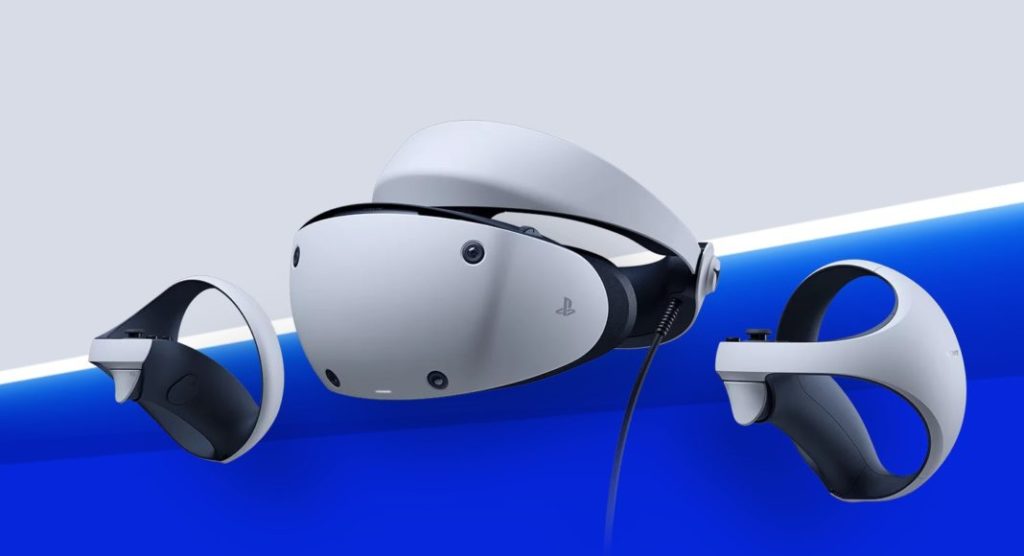
Price late 2025: €399 (regularly on sale at €349)
Type: PS5 Console + PC (via €60 adapter)
The PSVR2 found its audience in late 2025 thanks to a dual strategy: premium PS5 headset + official PC compatibility.
Strengths:
- 2000×2040/eye resolution with OLED screens (deep blacks)
- Native eye-tracking (foveated rendering)
- Haptic feedback in controllers + headset (tactile immersion)
- PlayStation VR exclusives (Horizon Call of the Mountain, Gran Turismo 7 VR, Resident Evil Village VR)
- PC compatible via official adapter (Steam VR access)
- 90Hz/120Hz refresh rate
- Price became very attractive in late 2025
Weaknesses:
- Requires a PS5 (or PC + adapter)
- Mandatory cable (no wireless version)
- Limited PS5 VR catalog vs. Meta or Steam
Verdict: If you own a PS5, it’s a no-brainer. The OLED image quality and Sony exclusives justify the purchase. The 2025 PC compatibility significantly broadens its appeal.
For whom? PS5 players, Sony exclusive fans, PCVR users looking for an affordable OLED headset.
4. Pimax Crystal Super: The Simulation and PCVR Benchmark

Price late 2025: €1799
Type: High-end PCVR
The Pimax Crystal Super reigns supreme in the simulation segment at the end of 2025. Its exceptional resolution and wide FOV make it the ultimate headset for Flight Simulator, iRacing, DCS, and Assetto Corsa.
Strengths:
- 2880×2880 pixels/eye resolution (unmatched clarity)
- 140° horizontal FOV (total cockpit immersion)
- Aspheric pancake lenses (edge-to-edge sharpness)
- Locally dimmed mini-LED screens (OLED-like contrast)
- Tobii eye-tracking (foveated rendering, GPU saving)
- Refresh rate up to 144Hz
- Standalone mode (Android) + wired/wireless PCVR
- Compatible with SteamVR, Pimax Play, OpenXR
Weaknesses:
- High price (€1799)
- Requires an ultra-powerful PC (RTX 4080/4090 recommended)
- Significant weight (850g, requires reinforced strap)
- More technical initial setup
Recommended VR simulation setup late 2025:
- Headset: Pimax Crystal Super or Crystal Light (€1299, lightweight version)
- PC: Intel i7-13700K / AMD Ryzen 7 7800X3D + 32GB DDR5 + RTX 4080 16GB minimum
- Games: Microsoft Flight Simulator VR, DCS World, iRacing, Assetto Corsa Competizione
- Accessories: Thrustmaster Warthog / Virpil HOTAS, Heusinkveld pedals, Fanatec DD Pro wheel
Optimization tip: Prioritize render scale and foveated rendering over ultra shadows/reflections. You will gain 30-40% FPS without perceptible loss of clarity.
🎁 Exclusive Promo Code
Get 8% off the Pimax Crystal Light with code oVRdoz08, and 3% off the Pimax Crystal Super with oVRdoz03 on the official Pimax website.
Verdict: The Pimax Crystal Super is THE benchmark VR headset for simulators in late 2025 and 2026. Incomparable clarity, wide FOV, efficient foveated rendering. A significant but justified investment for enthusiasts. Read our Pimax Crystal Super vs Meta Quest 3 comparison test for more details.
For whom? Simulation enthusiasts (flight, racing), demanding PCVR users, professionals requiring the best clarity.
5. Apple Vision Pro: Premium XR

Availability: Launched early 2024
Price late 2025: €3999
Type: Premium XR (Mixed Reality)
The Apple Vision Pro is a professional/creative XR platform. Note: this is NOT a gaming headset, but a device oriented toward productivity and premium immersive experiences.
Strengths:
- Exceptional 3680×3140/eye resolution (micro-OLED screens)
- Most realistic color passthrough on the market
- Ultra-precise eye-tracking (gaze navigation)
- Perfect Apple ecosystem integration
- Impeccable build quality
- M2 chip for high performance
- Unique spatial computing experience
Weaknesses:
- Prohibitive price (€3999)
- Limited VR gaming catalog
- Closed Apple ecosystem
- High weight (650g)
- Limited battery life (2h)
- Lower gaming performance than a PCVR headset
Verdict: The Apple Vision Pro remains a niche product for professionals, early adopters, and Apple fans. For pure gaming, the Meta Quest 3 or a PCVR headset offer much more for much less. For productivity, mixed reality, and a premium experience, it has no equal.
For whom? Creative professionals, visionOS developers, Apple early adopters, productivity/XR users.
6. Pico 4 Ultra: The Solid European Alternative
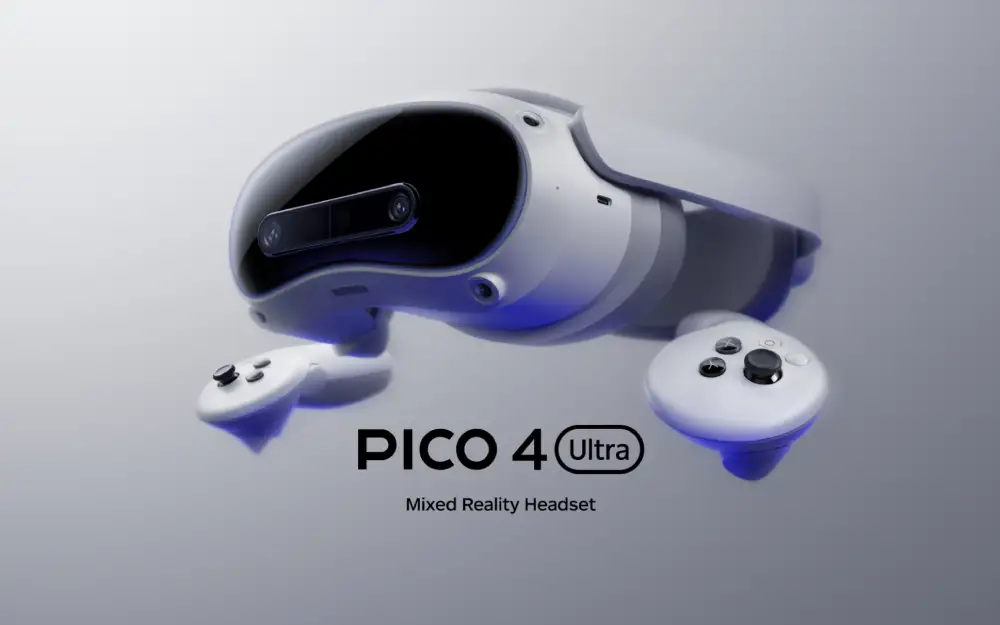
Price late 2025: €449
Type: Standalone
The Pico 4 Ultra (successor to the Pico 4) asserts itself as the best European alternative to Meta in late 2025. ByteDance (parent company) is investing heavily to compete with Quest’s hegemony.
Strengths:
- 2160×2160/eye resolution (higher than Quest 3)
- Exceptional comfort: optimal front/back weight distribution
- 105° horizontal FOV
- Integrated rear battery (better balance)
- Attractive price: €449
- No Meta account required (privacy alternative)
- PCVR compatible via Streaming Assistant
Weaknesses:
- Pico Store catalog less extensive than Meta
- Less frequent software updates
- Smaller community
Verdict: The Pico 4 Ultra is an excellent choice if you refuse the Meta ecosystem or seek superior comfort. The resolution exceeds the Quest 3, but the application catalog remains behind. Good quality/price compromise at €449.
For whom? Privacy-conscious users, European/Asian market, Meta alternative.
7. Bigscreen Beyond: The Ultra-Lightweight PCVR
Price late 2025: €999
Type: Ultra-lightweight PCVR
The Bigscreen Beyond targets a niche: PCVR users looking for the lightest headset on the market (only 127g!). Custom-made after a 3D scan of your face.
Strengths:
- Featherweight: 127g (vs. 500-850g for competitors)
- Exceptional long-term comfort
- 2560×2560/eye micro-OLED screens
- Custom-made (perfect light seal)
- Premium finishes
Weaknesses:
- Requires a powerful PC + SteamVR Base Stations
- Limited FOV (90°)
- No integrated audio
- Custom-made: 4-6 week manufacturing lead time
Verdict: A niche headset for PCVR aficionados willing to pay €999 for ultimate comfort. If you play 3h+ per session, the lightness radically changes the experience. Limited FOV makes it less suitable for simulation than the Pimax.
For whom? Hardcore PCVR players, long sessions, those sensitive to traditional headset weight.
VR Headsets to Avoid in 2026
⚠️ Obsolete Technologies in 2026
The VR market evolves fast. Some headsets that were once excellent are now technologically outdated:
- Oculus Rift S / Rift CV1: Meta support ended, incompatible with new games, old Fresnel lenses.
- HTC Vive (original): Resolution too low (1080×1200/eye), heavy, unjustified second-hand price.
- Windows Mixed Reality (WMR): Microsoft ended support in 2024. Avoid HP Reverb G2, Samsung Odyssey+, etc.
- Valve Index: Excelled in 2019, but 1440×1600/eye resolution is outdated in 2026. Quest 3 in standalone does better.
- Meta Quest 2: Replaced by Quest 3/3S. Same second-hand price as a new 3S with warranty. No point.
- PlayStation VR (PSVR1 PS4): Ridiculous resolution (960×1080/eye), obsolete camera tracking. PSVR2 at €399 makes it useless.
- Smartphone VR Headsets: Samsung Gear VR, Google Cardboard, Daydream → Totally dead in 2026. Don’t waste your time.
2026 Golden Rule: Do not buy a VR headset more than 3 years old, even second-hand. Technological progress (pancake lenses, resolution, processors) makes older models unpleasant by comparison.
Where to Find the Best Prices and VR Promotions in 2026?
VR headsets experience significant price variations depending on the period. Key 2026 periods:
- January (CES): New model announcements, promos on 2025 stock
- February-March: Stabilized prices post-CES
- Amazon Prime Day (July): -15 to -25% on Quest, Pico, accessories
- Black Friday / Cyber Monday (November): Biggest annual promos (up to -30% possible)
- Winter Sales (January 2027): Clearing stock before new models
Consult our complete Black Friday VR Deals guide to know the best buying periods and save up to €200 on your headset.
2026 Tip: Official retailers (Amazon, Best Buy, local electronics stores) align their prices. Prioritize them for warranty and after-sales service. Beware of Marketplace prices that are too low (grey market products, imports without local warranty).
FAQ – Your Questions About VR Headsets 2026
What is the best VR headset for beginners in 2026?
The Meta Quest 3S at €329 is the best entry point in early 2026. Standalone, simple to configure, rich catalog, and unbeatable price. If your budget allows, the Quest 3 at €449 offers a superior experience (better resolution, pancake lenses).
Do you need a powerful PC for virtual reality in 2026?
No, not necessarily anymore. Standalone headsets (Meta Quest 3/3S, Pico 4 Ultra) work without a PC. However, to exploit a high-end PCVR headset (Pimax Crystal Super, Bigscreen Beyond), a PC with at least an RTX 4070 (ideally 4080) and 32GB RAM is recommended.
Is the Meta Quest 3 still worth it in early 2026?
Yes, absolutely. The Quest 3 remains excellent in late 2025 and benefits from price drops (€449 vs. €549 at launch). It is the most powerful standalone headset currently available, with an excellent quality/price ratio.
What is the difference between VR and Mixed Reality (MR)?
VR (Virtual Reality) plunges you into a 100% virtual world. MR (Mixed Reality) overlays virtual elements onto your real environment via color passthrough. Example: playing virtual ping-pong on your real table. In late 2025, premium headsets (Quest 3, Apple Vision Pro) integrate both modes.
Which VR headset to choose for simulation (flight, racing)?
The Pimax Crystal Super (€1799) is the absolute benchmark in late 2025 for simulation thanks to its 2880×2880/eye resolution, 140° FOV, and eye-tracking. A more affordable alternative: the Pimax Crystal Light at €1299. These headsets require a very powerful PC (RTX 4080/4090).
Does VR still cause nausea in 2026?
Much less than before. High refresh rates (90-120Hz standard), reduced latencies, and foveated rendering have considerably decreased ‘motion sickness’. About 10-15% of users remain sensitive. Tip: start with static experiences (Beat Saber, shooters), and avoid artificial movement for the first few days.
Do VR headsets work with prescription glasses?
Yes, most 2026 headsets include spacers for glasses. The Quest 3/3S, PSVR2, and Pico 4 Ultra are compatible with glasses up to 142mm wide. Alternative: order custom corrective lenses (€60-80 from VR Optician, WidmoVR) that clip directly into the headset.
Can you watch movies in VR?
Absolutely. VR headsets offer a cinema experience equivalent to a giant screen. Recommended apps in 2026: Bigscreen (giant virtual screen), Meta TV (Quest), YouTube VR (360° videos), Netflix VR. The Apple Vision Pro particularly excels in this use thanks to its passthrough and micro-OLED screens.
Conclusion: Which VR Headset to Choose in 2026?
The virtual reality market has reached impressive maturity in late 2025. There is now an optimal VR headset for every profile and budget:
- Beginners / Tight budget → Meta Quest 3S (€329): unbeatable
- General public / Versatility → Meta Quest 3 (€449): the best standalone in late 2025
- PS5 Players → PlayStation VR2 (€399): exclusives + OLED quality
- Simulation / Demanding PCVR → Pimax Crystal Super (€1799): unmatched clarity
- Premium XR / Productivity → Apple Vision Pro (€3999): technical excellence
- Meta Alternative → Pico 4 Ultra (€449): good value for money
- Extreme PCVR Comfort → Bigscreen Beyond (€999): only 127g
Our universal recommendation for early 2026: If you are hesitating, go for the Meta Quest 3. It combines autonomy, power, a rich catalog, and PCVR versatility. It is the VR Swiss Army knife that will satisfy 90% of users.
For simulation enthusiasts, investing in a Pimax Crystal Super + a powerful PC radically transforms the cockpit experience. The clarity of the instruments and the wide FOV justify the extra cost.
Finally, wait for promotion periods (Prime Day in July, Black Friday in November) to save €100-200. Regularly check our Black Friday VR Deals guide to not miss anything.
VR in late 2025 is no longer an emerging technology; it is a mature, accessible, and stunning reality. Whatever your choice, you are going to live experiences impossible on a flat screen. Welcome to the future of interactive entertainment.
💡 Final advice: Before buying, test a VR headset at a friend’s house or in a store. Five minutes in immersion are worth more than ten articles. VR is something you experience.