Last Update on December 29, 2025
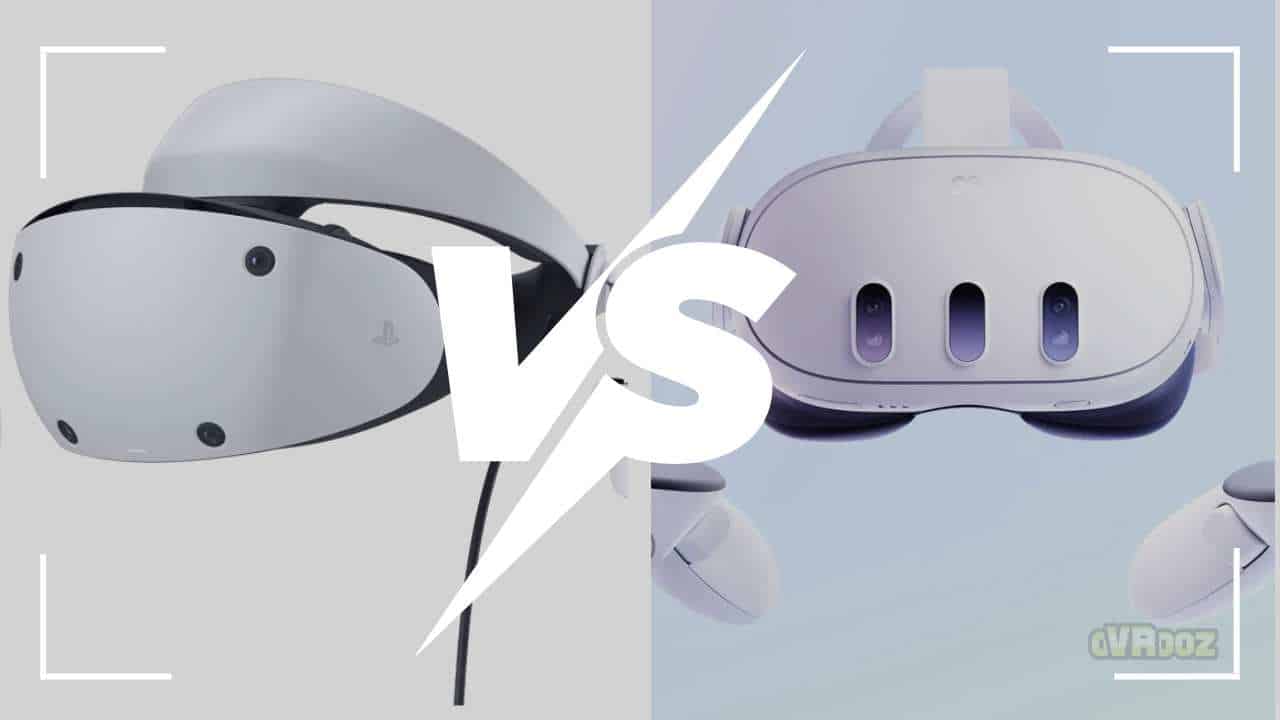
As of December 2025, virtual reality has reached impressive maturity. Two headsets dominate the consumer market: the Meta Quest 3 and the PlayStation VR2 (PSVR 2). After two years of intensive use of both devices, we have identified their strengths, weaknesses, and most importantly: which one truly fits your needs for 2026. This exhaustive guide will help you make the right choice between these two best VR headsets currently available.
2026 Verdict: Quick Comparison
Before diving into the technical details, here is our synthetic verdict after 24 months of intensive comparative testing:
Choose the Meta Quest 3 if:
- You are looking for a standalone wireless VR experience without a console
- Mixed Reality (MR) and color passthrough interest you
- You want to access PCVR via Quest Link or Air Link
- You prioritize versatility and portability
- You have a flexible budget (starting at €549 for the 128 GB model)
Choose the PSVR 2 if:
- You already own a PlayStation 5
- You prioritize OLED visual quality and HDR
- PlayStation VR exclusives attract you (Horizon Call of the Mountain, Gran Turismo 7 VR, Resident Evil Village VR)
- Eye tracking and foveated rendering are important to you
- You accept a wired headset for maximum graphical power
Our universal recommendation for 2026: The Meta Quest 3 wins the battle for versatility and overall value for money. However, if you are already in the PlayStation ecosystem, the PSVR 2 remains an excellent choice despite a catalog that is less extensive than expected. Announcements anticipated for 2026 could reverse this trend.
Technical Specifications: Quest 3 vs PSVR 2
Here is a detailed comparison table of technical characteristics updated for late 2025, valid for 2026:
| Feature | Meta Quest 3 | PSVR 2 | Winner |
|---|---|---|---|
| Total Resolution | 3664 x 1920 (1832 x 1920 per eye) | 4000 x 2040 (2000 x 2040 per eye) | PSVR 2 |
| Display Type | LCD with Pancake lenses | OLED HDR with Fresnel lenses | PSVR 2 (OLED) |
| Refresh Rate | 72Hz, 90Hz, 120Hz | 90Hz, 120Hz | Tie |
| Field of View | 110° horizontal, 96° vertical | 110° (approximate) | Tie |
| Processor | Qualcomm Snapdragon XR2 Gen 2 | PS5 Power (AMD Zen 2 + RDNA 2) | PSVR 2 (raw power) |
| RAM | 8 GB | Shared with PS5 (16 GB) | PSVR 2 |
| Storage | 128 GB, 512 GB | N/A (PS5 console) | Quest 3 |
| Weight | 515 grams | 560 grams | Quest 3 |
| Connection | Wireless (standalone) + optional PC Link | Wired USB-C to PS5 | Quest 3 |
| Eye Tracking | No | Yes (with foveated rendering) | PSVR 2 |
| Mixed Reality | Yes (high-resolution color passthrough) | No (basic passthrough via cameras) | Quest 3 |
| Price (December 2025) | €549 (128GB), €699 (512GB) | €599 (requires PS5 at €549) | Quest 3 (standalone) |
| PCVR Compatibility | Yes (Quest Link, Air Link, Virtual Desktop) | Yes (official PC adapter €59.99 since March 2024) | Quest 3 (native) |
2026 Technical Analysis: The PSVR 2 maintains an advantage in raw resolution and display technology (OLED), while the Quest 3 dominates in versatility, weight, and mixed reality features thanks to its revolutionary Pancake lenses. These characteristics remain relevant for 2026, with software evolutions expected on both sides.
Visual Quality: Pancake Lenses vs OLED Fresnel
The battle for image quality in 2026 pits two radically different philosophies against each other:
Meta Quest 3: Clarity and Generous Sweet Spot
The Pancake lenses of the Quest 3 have revolutionized VR optics. Unlike traditional Fresnel lenses, they offer:
- A considerably widened sharpness zone (sweet spot): 85% of the visible surface remains sharp, even in peripheral vision
- Drastic reduction in chromatic aberrations: No more unsightly colored fringes
- Better contrast and fewer lens flares thanks to multiple optical layers
- Ultra-thin profile: Headset is 40% less bulky than with Fresnel lenses
Identified limitation: LCD technology, even of high quality, cannot compete with OLED for deep blacks and infinite contrast.
PSVR 2: OLED Brilliance and Immersive HDR
The OLED HDR screens of the PSVR 2 represent the pinnacle of visual fidelity in VR:
- Absolute blacks: Each pixel turns off individually, creating infinite contrast
- Vibrant colors and exceptional saturation: 95% DCI-P3 gamut
- Authentic HDR: Extended dynamic range for simultaneously visible dark and bright scenes
- Near-instantaneous response time: 0.1 ms compared to 5-10 ms for LCD
Identified limitation: The sweet spot of Fresnel lenses remains small (about 60% of the surface), requiring precise headset adjustment. The screen door effect is slightly visible on solid light backgrounds.
2026 Visual Verdict
For dark and atmospheric games (horror, space exploration): PSVR 2 wins thanks to perfect blacks.
For textual clarity, overall sharpness, and prolonged visual comfort: Quest 3 dominates with its Pancake lenses.
According to current virtual reality standards, both headsets exceed the threshold of 20 pixels per degree considered optimal for immersion.
The Game Library in 2026: Sony Exclusives vs Meta Horizon
Available content remains the decisive criterion for many users. Here is the state of the catalogs at the end of 2025, with perspectives for 2026:
Meta Quest 3: A Thriving Ecosystem
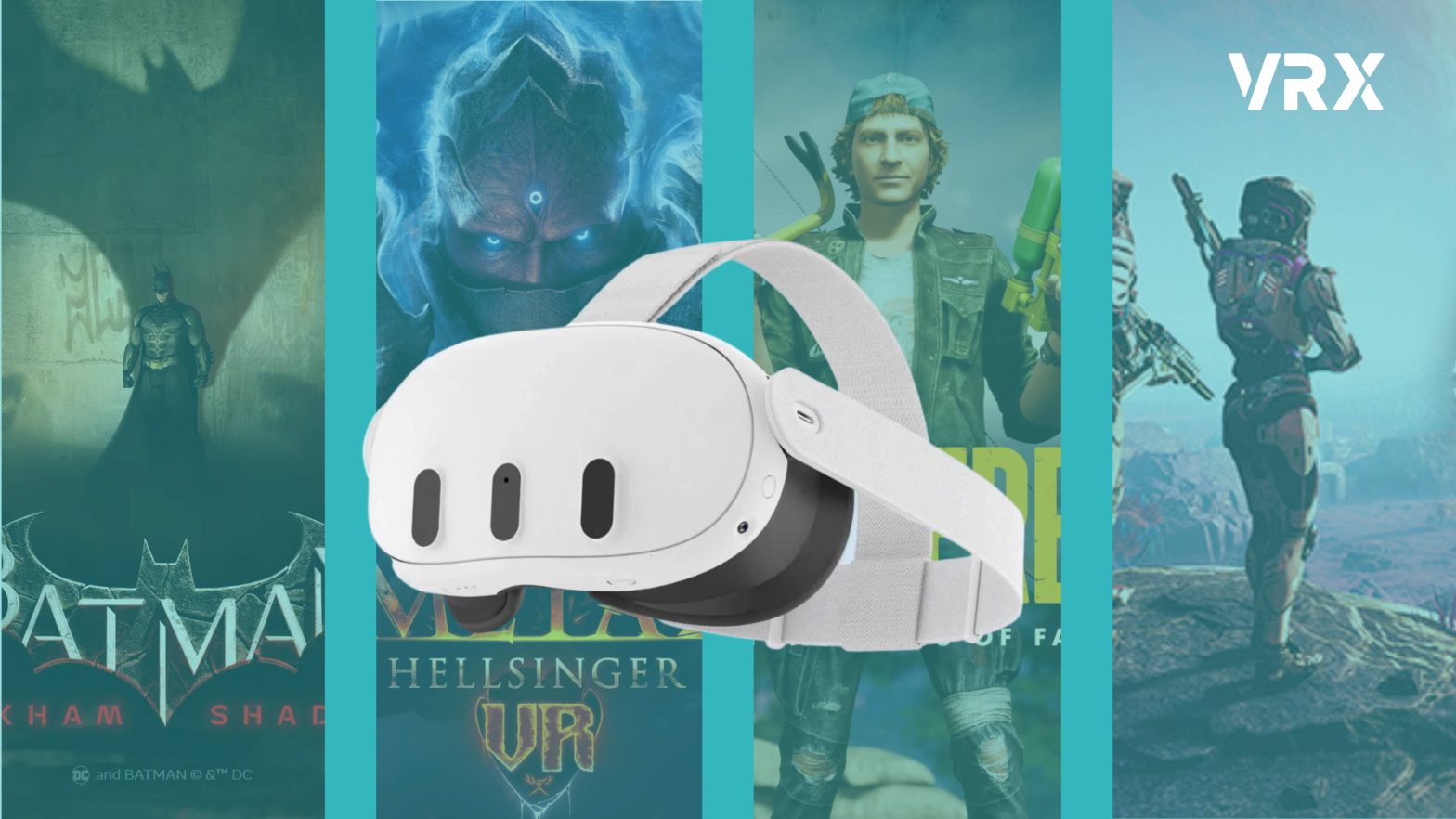
Key figures for late 2025 and 2026 forecasts:
- Over 1,200 games and applications on the Meta Quest Store (1,400+ expected in 2026)
- Meta Quest Plus catalog (subscription €9.99/month): 2 games offered monthly
- Full compatibility with the Quest 2 catalog (backwards compatibility)
- Access to PCVR via Steam VR (over 7,500 titles expected in 2026)
Major Quest 3 exclusives and hits:
- Asgard’s Wrath 2 (epic RPG)
- Batman: Arkham Shadow (Meta exclusive)
- Assassin’s Creed Nexus VR
- Beat Saber (360° mode optimized for Quest 3)
- Resident Evil 4 VR
- Population: One (VR Battle Royale)
- The Sims in mixed reality
- Expected 2026 releases: several AAA announcements planned for Connect 2026
Mixed reality advantage: Over 60 titles now exploit color passthrough for unique MR experiences, with 40% growth expected in 2026.
PSVR 2: Quality Over Quantity
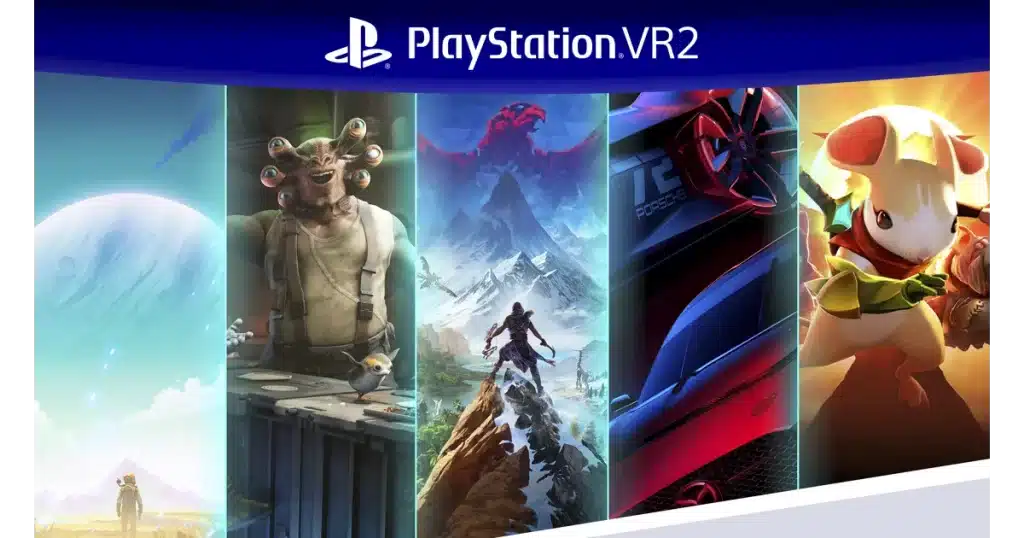
Key figures for late 2025 and 2026 perspectives:
- Approximately 200 games available (slower growth than anticipated)
- No PSVR 1 backwards compatibility (controversial decision)
- Official PCVR compatibility since March 2024 (€59.99 adapter)
- Expected announcements at State of Play 2026: several exclusives in development
Major PSVR 2 exclusives and hits:
- Horizon Call of the Mountain (technological showcase)
- Gran Turismo 7 (full VR mode)
- Resident Evil Village VR (AAA horror experience)
- Firewall Ultra
- Pavlov VR (console version)
- No Man’s Sky (free PSVR 2 update)
- Kayak VR: Mirage
- Potentially: new Sony first-party titles expected for 2026
The 2026 context: Sony slowed its investments in VR exclusives in 2025, but persistent rumors suggest several major announcements for 2026, including a possible title in the God of War or Uncharted universe. 2026 will be a decisive year for the future of PSVR 2.
2026 Catalog Verdict
Undisputed winner at the end of 2025: Meta Quest 3. The volume, diversity, and access to PCVR tip the scales. The PSVR 2 partially compensates with a few high-quality AAA exclusives, but the insufficient release pace was a concern in 2025.
For 2026: The year will be crucial for Sony. If the promised announcements materialize, the PSVR 2 could regain ground. In the meantime, the Quest 3 maintains its catalog advantage.
The PCVR Duel: Quest Link/Air Link vs PSVR2 PC Adapter
Both headsets can now connect to a VR PC. But the experience differs radically, and 2026 will likely bring software improvements on both sides.
Meta Quest 3: Native and Wireless PCVR
Three PC connection methods:
- Wired Quest Link: USB-C 3.0 cable (official cable €99 or third-party €20-30)
- Latency: 25-30 ms
- Quality: Up to 500 Mbps bandwidth
- Stability: Excellent
- Wireless Air Link: Via Wi-Fi 6 or 6E (dedicated router recommended)
- Latency: 35-45 ms (depending on network)
- Quality: 200 Mbps (adjustable)
- Total freedom of movement
- Improvement expected in 2026 with Wi-Fi 7
- Virtual Desktop: Third-party application (€19.99)
- Performance often superior to Air Link
- Advanced configuration available
Recommended PC configuration for 2026:
- GPU: NVIDIA RTX 4070 / 5060 or AMD RX 7800 XT / 8700 XT minimum
- CPU: Intel i5-13600K / i5-14600K or AMD Ryzen 7 7800X3D
- RAM: 16 GB DDR5
Quest 3 advantages in PCVR: Total versatility (standalone + PCVR), high-performance wireless solution, native Steam VR compatibility.
PSVR 2: PCVR via Official Adapter
Sony launched an official PC adapter at €59.99 in March 2024, allowing the PSVR 2 to work on PC via Steam VR. Software updates are expected in 2026 to improve compatibility.
Technical characteristics:
- Connection: DisplayPort 1.4 + USB 3.1 (requires two ports)
- Mandatory wired (no wireless solution)
- Latency: 20-25 ms (slightly better than Quest Link)
- Quality: Native 4K resolution maintained
Features retained in PCVR:
- Eye tracking (if supported by the game)
- Headset haptic feedback
- Sense controller adaptive triggers
Features lost:
- Automatic foveated rendering (depends on game engine)
- HDR (limited by DisplayPort)
Recommended PC configuration for 2026:
- GPU: NVIDIA RTX 4070 Ti / 5070 or AMD RX 7900 XT / 8800 XT minimum
- CPU: Intel i7-13700K / i7-14700K or AMD Ryzen 9 7900X
- RAM: 32 GB DDR5
- Ports: DisplayPort 1.4 + USB 3.1
2026 PCVR Verdict
For freedom and ease of use: Quest 3 (wireless, plug-and-play).
For maximum visual quality and haptic feedback: PSVR 2 (if you accept cables and invest in a powerful PC).
The arrival of the PCVR adapter has significantly increased the value of the PSVR 2 for gaming PC owners, but the Quest 3 remains more accessible and versatile. Expected developments in 2026 (Wi-Fi 7 compatibility for Quest, software optimizations for PSVR 2) will strengthen both positions.
Comfort and Ergonomics: The Long-Term Test
Comfort is paramount for VR sessions lasting several hours. Our 24-month tests reveal notable differences that remain valid for 2026.
Meta Quest 3: Light but Unbalanced
Strengths:
- Contained weight: 515 grams (30g more than Quest 2)
- Official Elite Strap (accessory €69.99): Drastically improves weight distribution
- Improved facial foam: More breathable than Quest 2
- Physical IPD adjustment: Three positions (58mm, 63mm, 68mm)
Weaknesses:
- Uncomfortable base textile strap: Excessive pressure on the forehead after 45 minutes
- Frontal weight distribution: Integrated battery at the front creates an imbalance
- Limited battery life: 2h-2h30 in intensive use (requires external battery for long sessions)
2026 Advice: Plan for an additional €70-100 for the Elite strap or an alternative like the BoboVR M3 (best comfort according to our tests).
PSVR 2: Balanced Halo Design
Strengths:
- Adjustable Halo strap: Distributes weight on the skull, not the face
- Precise adjustment: Rear dial allows for millimeter-perfect tightening
- Ventilated foam: Effectively dissipates heat
- No battery to manage: Powered via PS5 cable
- Motorized IPD adjustment: Continuous adjustment from 58mm to 72mm
Weaknesses:
- Higher weight: 560 grams (but better distributed)
- 4.5-meter USB-C cable: Can get tangled during quick rotations
- Bulky controller rings: Sense rings are large
Comfort Verdict: Prolonged Sessions
For 3h+ sessions: PSVR 2 with its Halo strap (with Quest 3 accessory: tie).
For lightness and portability: Quest 3 (especially on the go).
24-month summary: Both headsets require meticulous initial adjustment. The PSVR 2 offers better comfort ‘out of the box’, while the Quest 3 requires an accessory investment to reach the same level.
Advanced Technologies: Eye Tracking vs Mixed Reality
Each headset bets on a different cutting-edge technology. 2026 will likely see broader adoption of these innovations.
PSVR 2: Revolutionary Eye Tracking
The integrated eye tracking of the PSVR 2 remains its most advanced feature:
Technical applications:
- Dynamic foveated rendering: Renders in high definition only the area being looked at, saving 30-40% of GPU power
- Natural interactions: Selecting objects by sight (Horizon Call of the Mountain)
- Realistic depth of field effect: Blurring of non-viewed areas as in natural vision
- Improved facial animations: In multiplayer, your virtual eyes follow your real gaze
2026 Perspectives: More games should exploit eye tracking, especially the expected new exclusives. Out of about 200 titles at the end of 2025, only 25% actively use it, but this rate should increase significantly in 2026.
Quest 3: Mature Color Mixed Reality
The high-resolution color passthrough propels the Quest 3 as the leader in mixed reality (MR):
MR Characteristics:
- Passthrough resolution: 18 PPD (pixels per degree), 4x higher than Quest Pro
- Ultra-low latency: 12 ms (near real-time)
- Automatic spatial mapping: The headset scans your room and places virtual objects on/around real furniture
- Persistent anchoring: MR objects stay in place between sessions
Popular MR use cases and 2026 trends:
- Virtual board games on your real table (Demeo)
- Giant virtual screens for productivity (Immersed, Horizon Workrooms)
- Fitness with visualization of your space (Supernatural)
- Virtual decoration (trying out IKEA furniture in AR)
- New professional applications expected in 2026 (training, architecture)
Expected 2026 evolutions: Meta plans significant passthrough improvements via software updates, with even higher visual quality and new MR interaction features.
Future Technologies Verdict
2026-2027 Vision: PSVR 2’s eye tracking will likely become standard on future headsets (potentially Quest 4 in 2026). Quest 3’s mixed reality positions Meta as a pioneer of the tangible ‘metaverse’ and is already inspiring competition.
For 2026, Quest 3’s MR brings more immediate daily value, while PSVR 2’s eye tracking awaits broader exploitation by developers.
Value for Money in Early 2026
Let’s analyze the total cost of ownership after exploring all technical dimensions, with current late 2025 prices and perspectives for 2026.
Meta Quest 3: Scalable Investment

Base price (late 2025 / early 2026):
- Quest 3 128 GB: €549
- Quest 3 512 GB: €699
- Possible promotion: temporary price drops are expected in early 2026 before the Quest 4 announcement
Realistic total cost:
- 128 GB Headset: €549
- Elite Strap with battery: €149 (optional but recommended)
- Additional facial foam: €49 (hygiene)
- 5 games at €30 average: €150
- 1-year Quest Plus subscription: €120
- First-year total: €1,017
PCVR Option:
- Official Link Cable: €99 (or €25 third-party)
- Dedicated Wi-Fi 6E router (optimal Air Link): €150
- VR-ready gaming PC: €1,200-2,000 (if not owned)
Resale value in early 2026: €350-400 after 12 months (good second-hand market). Potentially higher if Quest 4 is not announced until late 2026.
PSVR 2: Ecosystem Investment
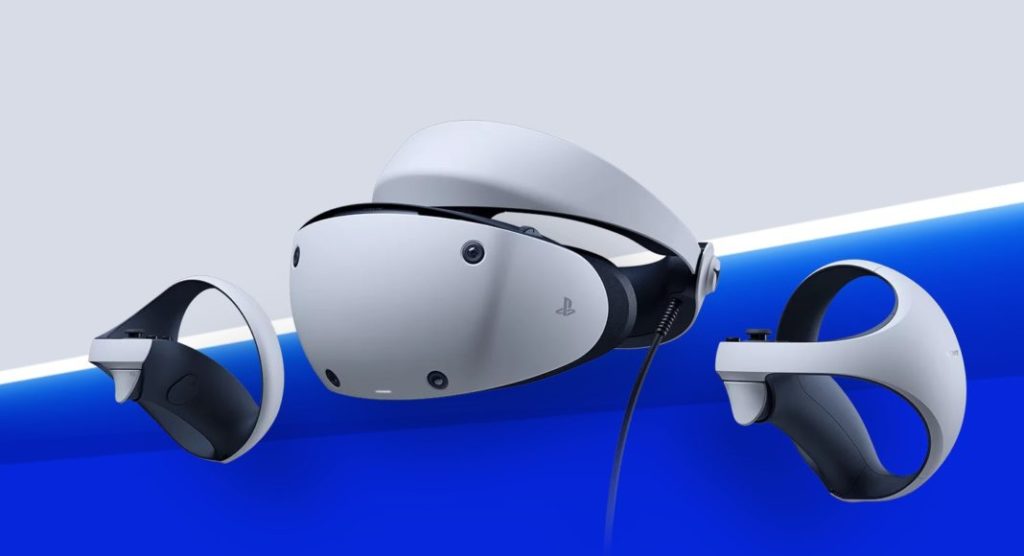
Base price (late 2025 / early 2026):
- PSVR 2 alone: €599
- PlayStation 5 (if not owned): €549 (Slim Digital) or €449 (used)
- Possible promotions: Sony might offer attractive bundles in early 2026
Realistic total cost (PS5 beginner):
- PS5 Slim Digital: €549
- PSVR 2: €599
- 5 VR games at €40 average: €200
- 1-year PlayStation Plus Essential: €60
- First-year total: €1,408
Total cost (already own PS5):
- PSVR 2: €599
- 5 VR games: €200
- Total: €799
PCVR Option:
- Official PC Adapter: €59.99
- High-end VR-ready gaming PC: €1,500-2,500 (demanding 4K)
Resale value in early 2026: €380-420 after 12 months (less liquid market than Quest). Value potentially influenced by Sony announcements planned for 2026.
Promotions and Second-Hand Market 2026
To maximize your budget, check our VR Headset Deals guide for the best opportunities.
Price trends for early 2026:
- Quest 3: Expected promos at €499 (128 GB) during 2026 winter sales, potentially more aggressive before the Quest 4 announcement
- PSVR 2: PS5 + PSVR 2 bundles at €999 possible (€149 saving), especially if Sony wants to boost sales before 2026 announcements
- Second-hand: Quest 3 128 GB at €380-420, PSVR 2 at €430-470 (check remaining warranty)
Note: If you are hesitating with the more affordable Meta Quest 3S (€299), check the detailed differences between the two models. The Quest 3S remains an excellent budget option for 2026.
Value for Money Verdict
Best value for VR beginners: Meta Quest 3 (complete standalone experience without console/PC investment).
Best value if you already own a PS5: PSVR 2 (only €599 for a premium VR experience).
Best value for PCVR enthusiasts: Quest 3 (standalone + wireless PCVR versatility at lower cost).
2026 Perspective: Both headsets should see price adjustments and attractive bundles in the first quarter of 2026. Keep an eye on Sony and Meta announcements that could significantly influence the market.
Conclusion: Which One to Choose for 2026?
After 24 months of intensive and comparative use of both headsets, here is our definitive verdict for the year 2026:
The Meta Quest 3 Is Your Choice If:
- You are starting in VR without a console or gaming PC
- You are looking for maximum versatility (standalone, PCVR, MR)
- Absence of cables is a priority
- You want the largest game catalog (1,200+ titles, 1,400+ expected in 2026)
- Mixed reality intrigues you
- You plan to travel with your headset
- Your budget is flexible but you want to optimize value for money
- You want a ‘future-proof’ headset with regular updates
Final Quest 3 Score: 9/10 – The most complete and accessible VR headset for 2026, with a constantly expanding ecosystem.
The PSVR 2 Is Your Choice If:
- You already own a PlayStation 5
- You prioritize absolute visual quality (OLED, HDR)
- PlayStation exclusives (Horizon, GT7, RE Village) attract you
- The cable doesn’t bother you for graphical power
- You appreciate advanced technologies (eye tracking, advanced haptic feedback)
- You don’t plan to travel with your headset
- You have a powerful gaming PC and want to exploit it in 4K VR
- You are patient and waiting for Sony’s 2026 announcements
Final PSVR 2 Score: 8/10 – A premium VR experience for the PlayStation ecosystem. 2026 will be decisive: if Sony keeps its exclusive promises, this score could climb to 8.5/10.
Our Universal Recommendation for 2026
If you own neither a PS5 nor have an ecosystem preference: Choose the Meta Quest 3. Its versatility, thriving catalog, and standalone capability make it the most relevant VR headset for 2026-2027.
If you are already in the PlayStation ecosystem and own a PS5: The PSVR 2 remains an excellent purchase at €599, despite our reservations about its catalog. The few AAA exclusives justify the investment for Sony fans, and 2026 could bring the long-awaited announcements.
The future in 2026-2027: Watch for the Meta Quest 4 (likely announced late 2026, release 2027) and potential Sony announcements at State of Play or PlayStation Showcase 2026 regarding long-term support for PSVR 2. Several rumors suggest a renewal of the PSVR 2 catalog in 2026. The consumer VR battle is entering a crucial phase, and 2026 could redefine the rankings.
Final advice: If you buy in early 2026, the Quest 3 is the safest choice. If you can wait until spring 2026, monitor announcements from both manufacturers that could influence your decision (especially the PlayStation Showcase planned for May 2026).
FAQ: Meta Quest 3 vs PSVR 2
Is the PSVR 2 still worth it in 2026?
Yes, but only if you already own a PlayStation 5. The headset offers exceptional OLED visual quality and some remarkable AAA exclusives (Horizon Call of the Mountain, Gran Turismo 7 VR). The release pace of new games slowed in 2025, but several major announcements are expected for 2026, notably at the PlayStation Showcase planned for May. At €599 for PS5 owners, it’s an investment that remains justified, especially if 2026 exclusive rumors are confirmed. For a combined PS5 + PSVR 2 purchase (€1,148 total), the Quest 3 currently offers better overall value for money, unless you are particularly drawn to the PlayStation ecosystem.
Can you play without a PC or console with the Quest 3?
Absolutely, that is the main advantage of the Meta Quest 3. It works completely autonomously thanks to its integrated Snapdragon XR2 Gen 2 processor. You don’t need any external equipment: turn on the headset and immediately play the 1,200+ games on the Quest Store (1,400+ expected in 2026). PCVR via Quest Link or Air Link is optional, not mandatory. This makes the Quest 3 ideal for VR beginners without existing gaming infrastructure. Additionally, regular Meta updates continuously improve standalone performance, ensuring long-term relevance for 2026 and beyond.
Which headset has the best image quality in 2026?
The answer depends on your priority. The PSVR 2 excels in contrast, deep blacks, and HDR rendering thanks to its OLED screens and slightly higher resolution (2000×2040 per eye vs 1832×1920). The Quest 3 dominates in overall sharpness, wide clarity zone, and visual comfort thanks to its revolutionary Pancake lenses. For dark and atmospheric games: PSVR 2. For textual clarity and prolonged comfort: Quest 3. Both far exceed 2026 VR quality standards. Note: software updates could further optimize the visual rendering of both headsets during 2026.
Is the PSVR 2 cable annoying compared to wireless?
Based on our 24-month experience: yes, the 4.5-meter USB-C cable of the PSVR 2 is felt during quick rotations (action games, VR FPS). You get used to it gradually, but you occasionally need to ‘untangle’ the cable. On the other hand, the cable guarantees unlimited power (no battery management) and minimal latency. The Quest 3’s wireless offers unmatched total freedom, at the cost of a 2h-2h30 battery life requiring breaks or an external battery. The choice between the two depends on your tolerance for cables vs battery management. For 2026, no official wireless solution is planned for the PSVR 2, while the Quest 3 will likely benefit from wireless connectivity improvements (Wi-Fi 7).
Can you connect the PSVR 2 to a PC?
Yes, since March 2024, Sony has offered an official PC adapter for €59.99 allowing the PSVR 2 to connect to a computer via DisplayPort and USB 3.1. The headset then becomes Steam VR compatible while retaining eye tracking and haptic feedback. Limitations: no wireless solution, HDR disabled, and requires a very powerful PC (RTX 4070 Ti / 5070 or higher recommended) to exploit 4K resolution. Adapter updates are expected in 2026 to improve compatibility with certain games. This is an excellent development that increases the value of the PSVR 2, but the Quest 3 remains simpler and more versatile for PCVR thanks to its wireless solutions (Air Link, Virtual Desktop).
Is the Quest 3 compatible with PSVR 2 games?
No, the two ecosystems are completely separate. Games purchased on the PlayStation Store for PSVR 2 do not work on Quest 3, and vice versa. Some games exist on both platforms (Resident Evil 4 VR, Pavlov, Beat Saber), but require a separate purchase on each store. If you switch headsets, you will have to rebuy your library. This is why the initial choice is crucial: prioritize the headset whose ecosystem and exclusives best match your gaming preferences. For 2026, watch for potential cross-promotions or bundles that could mitigate this disadvantage, although no official announcement has been made in this direction.