Last Update on December 28, 2025
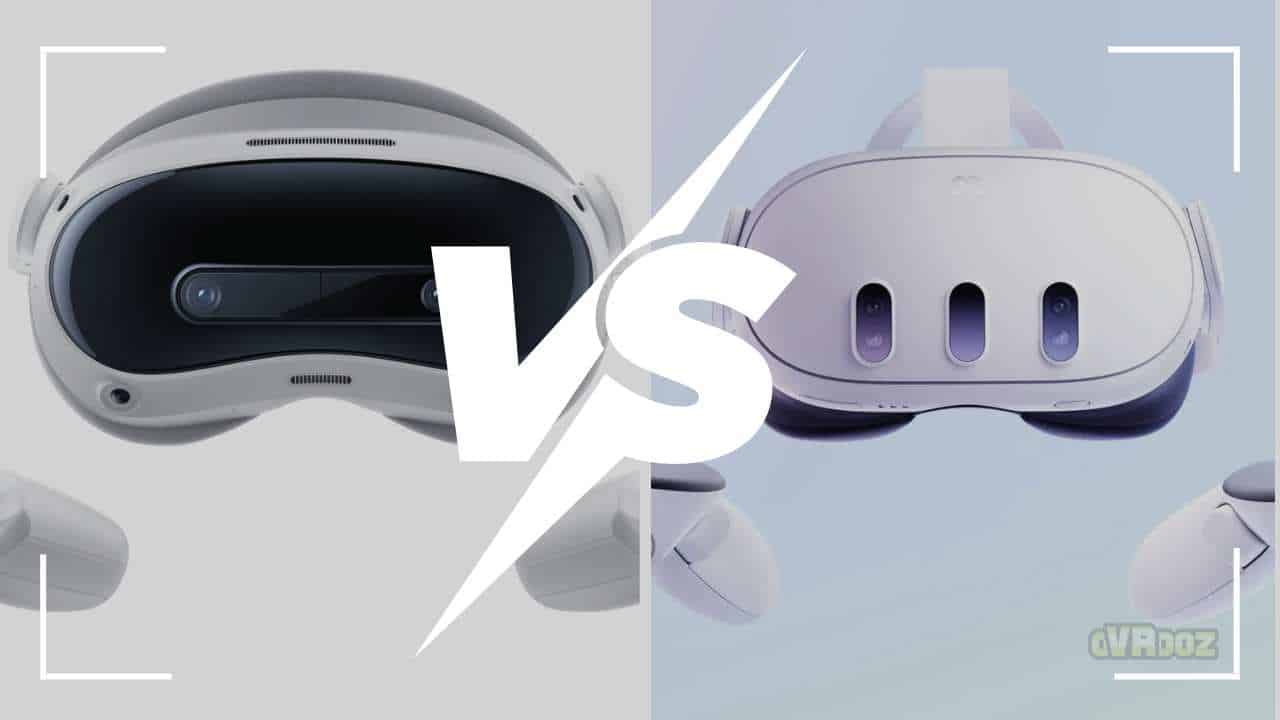
In 2026, the virtual reality market is dominated by two standalone headsets that continue to spark debate: ByteDance’s Pico 4 and Meta’s Quest 3. After two years of intensive use by the VR community, we now have valuable hindsight on these two devices. The Pico 4, launched at an aggressive price with innovative pancake lenses, won over wireless PCVR enthusiasts. The Quest 3, with its mature ecosystem and advanced mixed reality capabilities, maintains its leading position. This exhaustive comparison analyzes all the decisive criteria for 2026: visual quality, long-term comfort, PCVR streaming performance, game library, and value for money in both the new and second-hand markets. Our goal: to help you make the best choice according to your user profile and budget.
Quick Verdict: Which one to buy in 2026?
For the majority of VR users, the Meta Quest 3 stands out as the safest choice in 2026. Its mature ecosystem, unmatched exclusive game library (Batman: Arkham Shadow, Asgard’s Wrath 2), and regular software updates justify its premium price. The color mixed reality capabilities open up experiences that are impossible on Pico 4.
The Pico 4 remains relevant for three specific profiles: priority PCVR players seeking the best Virtual Desktop encoding, those on tight budgets (especially on the second-hand market where it can be found for €250-300), and European users hesitant about the Meta ecosystem. In 2026, the Pico 4 still benefits from excellent ergonomic comfort thanks to its rear battery, but its native game catalog is stagnating dangerously.
Express comparison table:
- Best ecosystem: Quest 3 (far ahead)
- Best comfort: Pico 4 (superior balance)
- Best value for money: Pico 4 second-hand, Quest 3 new
- Wireless PCVR: Tie (both are excellent)
- Mixed reality: Quest 3 (incomparable)
- Long-term durability: Quest 3 (guaranteed software support)
Technical Specifications Comparison
Hardware specifications form the foundation of the VR experience. Here is a detailed analysis of the key components that truly differentiate these two headsets in 2026.
Processor and Computing Power
The Meta Quest 3 features the Qualcomm Snapdragon XR2 Gen 2, a chip specifically optimized for VR that offers 2.5 times more graphic performance than the XR2 Gen 1 found in the Pico 4. This difference translates concretely into more detailed textures in native games, more complex environments, and better management of dynamic lighting effects.
The Pico 4 uses the Snapdragon XR2 Gen 1 (identical to the Quest 2), which slightly limits its native graphic capabilities. However, for PCVR streaming, this difference fades since your computer does the heavy lifting. In standalone use, you will notice slightly longer loading times and some graphic compromises on the most demanding titles.
Resolution and Display Quality
- Quest 3: 2064 x 2208 pixels per eye (4.6 million pixels total), LCD panel with pancake lenses
- Pico 4: 2160 x 2160 pixels per eye (4.7 million pixels total), LCD panel with pancake lenses
On paper, the Pico 4 has a slightly higher resolution. In practice in 2026, the difference is imperceptible to the naked eye. Both headsets benefit from pancake lenses that almost totally eliminate the ‘screen-door’ effect and offer exceptional clarity across the entire field of vision. The Quest 3 compensates for its slight pixel disadvantage with better color rendering and superior contrast thanks to its software optimizations.
The field of view is similar: about 105-110° horizontally for both devices, which remains standard for standalone VR headsets in 2026.
Refresh Rate
Both headsets support 90 Hz natively, with the Quest 3 able to go up to 120 Hz on certain optimized titles. In PCVR, the Pico 4 also reaches 90 Hz via Virtual Desktop or Steam Link. For the majority of users, 90 Hz offers sufficient fluidity and significantly reduces motion sickness compared to the old 72 Hz standard.
Visual Quality and Pancake Lenses: The Duel
The adoption of pancake lenses by both manufacturers represents one of the greatest VR advances in recent years. These ultra-thin lenses allow for a compact headset profile while eliminating the peripheral distortions of old Fresnel lenses.
Optical Clarity and Sweet Spot
The ‘sweet spot’ (optimal sharpness zone) is exceptionally wide on both headsets. Even when looking into the extreme corners of the field of vision, text remains readable. This is a considerable leap forward compared to previous generations where only the central area was truly sharp.
The Quest 3 benefits from slightly superior anti-reflective treatment, reducing ‘god rays’ (stray light rays) in high-contrast scenes. The Pico 4 sometimes shows slight halos around bright light sources on a black background, but this remains minor in daily use.
Brightness and Color Rendering
In 2026, user feedback confirms that the Quest 3 offers superior brightness (about 100 nits more according to tests), particularly appreciated in mixed reality and very bright virtual environments. The LCD panels of both headsets offer vivid and saturated colors, but the Quest 3 displays slightly deeper blacks thanks to its improved software calibration.
The Pico 4 maintains excellent color rendering with a neutral color temperature, ideal for watching movies or working in a virtual office (via Immersed or Virtual Desktop).
Comfort and Ergonomics After 2 Years of Use
After two years of intensive use by the community, a clear consensus emerges: the Pico 4 is objectively more comfortable for extended sessions exceeding 1 hour.
Weight Distribution and Balance
The Pico 4 adopts a design with the battery at the back (in the occipital halo), creating a perfect front/back balance. This ergonomic choice drastically reduces facial pressure. Total weight: 586 grams, but it feels much lighter because the weight is distributed uniformly.
The Quest 3 concentrates more mass at the front (515 grams total), which, despite a lower raw weight, generates more pressure on the cheekbones and forehead during intense gaming sessions. Meta has improved the default strap compared to the Quest 2, but it is still recommended to invest in the Elite Strap with battery (sold separately for €129) to match the comfort of the Pico 4.
Facial Interface and Breathability
Both headsets offer washable silicone facial foams, essential for hygiene. The Pico 4 includes a glasses spacer in the box, while Meta sells it as an option for the Quest 3 (€50). In 2026, both manufacturers offer third-party facial interfaces (AMVR, VR Cover) that significantly improve breathability and comfort.
A crucial point for glasses wearers: the Pico 4 offers more internal space to accommodate wide frames without discomfort.
Diopter Adjustment
Neither headset offers integrated diopter adjustment (unlike the Pico 4 Ultra released in late 2024). Nearsighted users will either need to wear their glasses or invest in custom prescription lenses (VR Optician, around €70-90). Interpupillary distance (IPD) adjustment is physical and continuous on the Pico 4 (62-72mm), while the Quest 3 offers three fixed positions (58mm, 63mm, 68mm).
Ecosystem and Games: Meta’s Domination in 2026?

This is where the gap widens dangerously between the two platforms. The software ecosystem is now the primary selling point for the Quest 3.
Exclusive Game Libraries
The Meta Quest Store in 2026 features over 500 applications and games, including AAA exclusives that will never come to Pico:
- Batman: Arkham Shadow – AAA action game developed by Camouflaj
- Asgard’s Wrath 2 – Epic 60+ hour RPG
- Beat Saber – The iconic rhythm game with regular DLCs
- Resident Evil 4 VR – Meta-exclusive port with console quality
- Assassin’s Creed Nexus VR – Ubisoft’s latest exclusive
The Pico Store stagnates at around 250 applications, mostly composed of indie games. Some multiplatform titles (Walkabout Mini Golf, Demeo) are available, but the catalog cruelly lacks high-quality exclusives. ByteDance seems to have slowed its investment in first-party studios in 2025.
Meta Quest+ Subscription vs Pico Alternatives
Meta offers Quest+ (€7.99/month) giving access to 2-3 monthly games to keep as long as the subscription is active. Over 12 months, this represents 24-36 games for €96, excellent value for money. Pico offers no comparable subscription service in 2026.
Horizon OS and Social Integration
The Quest 3 benefits from Horizon OS, Meta’s VR operating system natively integrating social features: voice rooms, screen sharing, and video co-watching. Pico OS remains functional but sparse, with limited social features and a smaller European community.

Mixed Reality and Passthrough: Has the Gap Widened?
Mixed reality (blending virtual and real elements) represents the future of VR according to Meta. In 2026, the Quest 3 definitively widens the gap in this area.
Color Passthrough Quality
The Quest 3 features two high-resolution RGB cameras offering near-natural quality color passthrough. The resolution is sufficient to read your smartphone, type on a physical keyboard, or interact with your environment without removing the headset. Latency is under 20ms, creating a convincing impression of ‘transparency’.
The Pico 4 offers color passthrough but of significantly lower quality: grainy image, washed-out colors, and noticeable latency. It’s enough to find a dropped controller, but makes prolonged mixed reality use impossible. There is no spatial tracking of real objects or precise anchoring of virtual elements.
Mixed Reality Applications
The Quest 3 regularly receives exclusive mixed reality games and apps exploiting its cameras: First Encounters (impressive free demo), BAM! (AR brick-breaker), Demeo (the game board sits on your real table). These experiences are impossible on Pico 4.
In 2026, Meta is heavily pushing mixed reality as a key differentiator, with a complete SDK for developers. The Pico 4, released before this trend, cannot catch up with its hardware limitations.
PCVR Streaming: Is Pico 4 Still the Budget King?
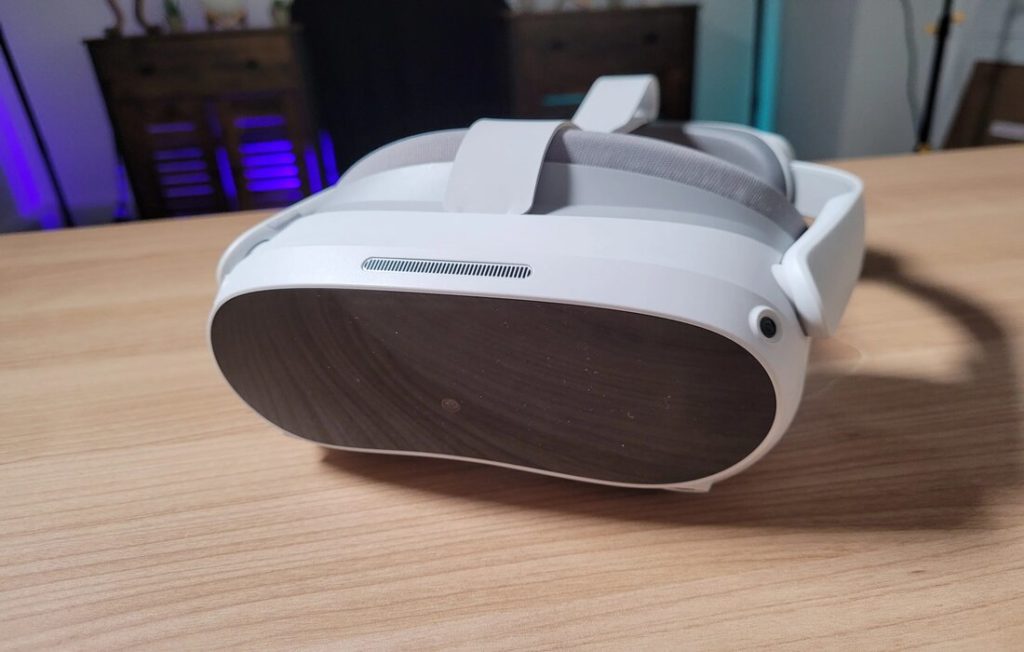
For owners of a powerful gaming PC, wireless PCVR (Wi-Fi streaming) multiplies the accessible game library. This has historically been a strong point for the Pico 4.
Virtual Desktop: The Miracle App
Virtual Desktop (€19.99) remains the gold standard for streaming SteamVR and PC games to your headset. In 2026, performance is excellent on both headsets with a dedicated Wi-Fi 6 or Wi-Fi 6E router:
- Latency: 30-40ms on both (imperceptible in use)
- Image Quality: HEVC/AV1 encoding, bitrate up to 200 Mbps
- Resolution: Up to 1.7x supersampling if your GPU allows it
The Pico 4 historically benefited from a slight encoding advantage according to some Reddit users, but 2024-2025 updates for the Quest 3 have closed this gap. In 2026, PCVR performance is equivalent between the two headsets with Virtual Desktop.
Oculus Link vs Pico Streaming Assistant
The Quest 3 offers Oculus Link (wired USB-C) and Air Link (native wireless) to access Oculus Rift and SteamVR games. Integration is smooth and requires no third-party apps. The Pico 4 uses Streaming Assistant, a less optimized third-party software that sometimes generates connection bugs.
PCVR Verdict 2026: Technical tie with Virtual Desktop, but the Quest 3’s native integration is more convenient for beginners.
Optimal Network Configuration
For both headsets, investing in a dedicated Wi-Fi 6/6E router (Asus RT-AX55, TP-Link AX73, around €100-150) placed in the same room as your VR space is essential. NEVER use your standard internet box’s Wi-Fi: latency and micro-stutters will make the experience unpleasant.
Performance, Battery Life, and Cooling
Raw Power in Native Gaming
The Snapdragon XR2 Gen 2 in the Quest 3 offers 30-40% higher graphic performance in native gaming compared to the Pico 4. Concretely, this results in:
- High-resolution textures maintained even in complex scenes
- Increased detail draw distance (less ‘pop-in’)
- Richer particle effects and dynamic lighting
- Stable framerate at 90 fps even on recent AAA titles
The Pico 4 maintains 90 fps on most games in its catalog, but developers must make greater graphic compromises. On crossplay games (available on both platforms), the Quest 3 version consistently displays better textures.
Battery Life in 2025 – 2026
- Quest 3: 5,310 mAh, 2h15 on average in intensive gaming (Batman, Asgard’s Wrath 2), up to 3h in light applications (web browsing, 2D video)
- Pico 4: 5,300 mAh, 2h45 on average in intensive gaming, up to 3h30 in light use
The Pico 4 offers 20-30% more battery life thanks to its less power-hungry processor. For VR marathons, this is a real advantage. Both headsets support USB-C fast charging (full recharge in 2h15-2h30).
Solution for long sessions: a 10,000 mAh USB-C external battery (Anker, RAVPower) in your pocket extends battery life by an additional 4-5 hours on both headsets.
Thermal Management
The Quest 3 integrates an active fan audible in silent menus but inaudible once the game starts. The temperature remains acceptable even after 2h of intensive play (slight warmth on the forehead, never uncomfortable).
The Pico 4 uses passive cooling (graphite heat sink) that is totally silent. Temperatures are slightly higher after 90 minutes but remain within acceptable limits. No thermal throttling observed on either headset in normal use.
Price, Availability, and the Second-Hand Market in 2026
Official New Prices (December 2025)
- Meta Quest 3:
- 128 GB Version: €549.99 (includes Batman: Arkham Shadow)
- 512 GB Version: €699.99
- Pico 4:
- 128 GB Version: €389.99 (official price maintained since 2023)
- 256 GB Version: €429.99
The price gap is €160 between the entry-level versions, making the Quest 3 41% more expensive. Is this difference justified in 2026? For the majority of users looking for a rich ecosystem, yes. For exclusive PCVR players, it’s debatable.
Second-Hand Market: The Pico 4 Opportunity
In 2026, the second-hand market becomes a crucial parameter. On platforms like eBay, Facebook Marketplace, and specialized VR groups, you can find:
- Used Pico 4: €250-300 in excellent condition (30-35% cheaper than new)
- Used Quest 3: €450-500 in excellent condition (10-15% cheaper than new)
The Pico 4 depreciates faster, creating an exceptional opportunity for budget buyers. At €250 second-hand, it is objectively the best standalone VR entry point in 2026 for testing wireless PCVR or discovering VR.
Availability and Customer Support
The Quest 3 is widely available at all major retailers (Amazon, official Meta store). Meta’s customer support is responsive, with replacements in 7-10 days for defects under warranty (2-year manufacturer warranty).
The Pico 4 is harder to find in physical stores (mainly via Amazon and the official Pico site). ByteDance’s customer support is less responsive according to 2024-2025 community feedback, with longer processing times. A point of caution for buyers.
Total Cost of Ownership
Don’t forget the almost mandatory accessories in your budget calculation:
- Quest 3: Elite Strap with battery (+€129), VR Cover facial interface (+€40), prescription lenses if needed (+€80) = Realistic total €550 + €250 = €800
- Pico 4: Third-party facial interface (+€30), prescription lenses (+€80) = Realistic total €390 + €110 = €500
The real gap in optimal configuration is €300, not €160.
Lifespan and Long-Term Software Support
An often overlooked but crucial criterion: how long will your headset remain supported?
Software Updates
Meta deploys monthly updates for the Quest 3, regularly bringing new features: hand tracking improvements, performance optimizations, and new Horizon OS features. The Quest 2 released in 2020 still receives updates in 2025, suggesting a minimum of 4-5 years of support for the Quest 3.
Pico deploys quarterly updates, mostly corrective. Few major new features were added to the Pico 4 in 2024-2025, worrying the community about ByteDance’s long-term commitment. The Pico Neo 3 (2021) receives almost no support in 2026.
Spare Parts Availability
In 2026, Quest 3 controllers are easily replaceable individually (€79/controller on the Meta store). Facial foams, replacement batteries, and straps are abundant from third-party manufacturers.
Pico 4 controllers are harder to find as spare parts (often out of stock on the Pico Europe store). Third-party accessories are fewer. This is concerning for long-term repairability.
Conclusion and Final Verdict 2026
After this exhaustive analysis of all relevant criteria in 2025 – 2026, our final recommendation depends on your profile:
Buy the Meta Quest 3 if:
- You want the best VR ecosystem with AAA exclusives (Batman, Asgard’s Wrath 2)
- Mixed reality interests you (AR games, productivity)
- You are looking for the best social integration (Horizon, easy sharing)
- You prioritize long-term support and regular updates
- Budget: €550-700 depending on storage
Buy the Pico 4 if:
- You are primarily a PCVR player (SteamVR via Virtual Desktop)
- Comfort is your absolute priority (2h+ sessions)
- You are looking for the best value for money, especially second-hand (€250-300)
- You are hesitant about the Meta/Facebook ecosystem
- You already have a substantial Steam VR library
Our Global Verdict 2026
The Meta Quest 3 is the reference standalone VR headset in 2026 for 80% of users. Its mature ecosystem, superior performance, and long-term support justify its premium price. It is the ‘safe’ choice that generates no regrets.
The Pico 4 remains relevant as a budget VR headset, particularly second-hand, and for PCVR players who don’t care for standalone games. Its superior comfort is a real argument for marathon sessions. But its stagnant catalog and uncertain software support make it a riskier bet in 2026.
The trap to avoid: buying a new Pico 4 at €390 thinking you’re getting a bargain. At this price, save €160 more for the Quest 3 128 GB which offers a globally superior experience. The Pico 4 only makes sense at €250-300 maximum second-hand.
To further your thinking, check out our detailed comparison between the Pico 4 and the Quest 2 or our list of the best VR headsets in 2026 to explore other options like the Pico 4 Ultra or the Quest 3S.
FAQ: Frequently Asked Questions Pico 4 vs Quest 3
Can you play Quest games on Pico 4?
No, it is legally impossible. Meta Quest Store games are locked to the Meta ecosystem and do not work on Pico 4. Only multiplatform games (available on both Pico Store AND Quest Store) can be played on both headsets, but you must purchase them separately on each platform. However, all your SteamVR games work on both headsets via PCVR.
Which one is more comfortable for glasses wearers?
The Pico 4 offers more internal space and includes a glasses spacer in the box. The Quest 3 is tighter, and the spacer is sold separately (€50). However, we strongly recommend investing in custom prescription lenses (VR Optician, Lenslab, €70-90) for optimal comfort on both headsets. This is the best long-term solution.
Does the price difference justify the Quest 3 in 2026?
Yes, if the ecosystem matters to you. The extra €160 gives you access to a library twice as large with AAA exclusives found nowhere else, guaranteed software support for 4-5 years, and unmatched mixed reality capabilities. If you primarily play in PCVR and never touch standalone games, the price gap is less justified – then prioritize a second-hand Pico 4 at €250-300.
Which headset has the best battery life?
The Pico 4 lasts 20-30% longer: 2h45 in intensive gaming vs 2h15 for the Quest 3. For marathon sessions, the Pico 4 has the advantage. On both headsets, a 10,000 mAh USB-C external battery extends battery life by 4-5 hours.
Is the Quest 3 better for wireless PCVR?
Equivalent performance with Virtual Desktop and a dedicated Wi-Fi 6/6E router. The Quest 3 offers easier native integration (Oculus Link/Air Link), but experienced PCVR players will have no trouble configuring Virtual Desktop on Pico 4. In 2026, the myth of Pico 4 superiority in PCVR is no longer relevant – it’s 50/50.