Last Update on December 27, 2025
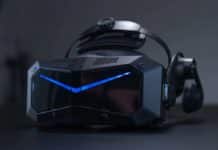
In December 2025, as virtual reality experiences a spectacular renaissance, one question keeps coming up: does the PlayStation VR2 still deserve its place on the console VR throne?
Since its launch in February 2023, Sony’s headset has seen its share of highs and lows. But with the arrival of PC compatibility in August 2024 and PS5 Pro optimization in late 2024, the PSVR 2 is entering a new phase. After three years of intensive use and hundreds of hours spent in virtual worlds, we have re-tested the headset from top to bottom to give you our definitive verdict at the end of 2025.
Spoiler: some things have changed. Others, not enough.
Is the PSVR 2 still worth it in late 2025?
Let’s get straight to the point: yes, but with conditions.
In 2025, the VR market has become considerably denser. The Meta Quest 3S offers an accessible entry-level option, the Quest 3 dominates wireless play, and PC headsets like the Valve Index continue to evolve. Faced with this competition, the PSVR 2 must justify its positioning.
Strengths that stand the test of time:
- Exceptional image quality: HDR OLED panels offer deep blacks and vibrant colors that the LCD screens of the Quest cannot match
- Headset haptic feedback: This unique feature in 2025 creates an unparalleled sensory immersion
- Native eye-tracking: Gaze tracking allows for dynamic foveated rendering, optimizing performance
- PlayStation Ecosystem: Access to Sony exclusives remains a strong selling point
- Lower price: By late 2025, the headset is regularly found at €449 (compared to €599 at launch), or even less during promotions
Weaknesses that persist:
- Mandatory cable: In 2025, the lack of a wireless solution becomes truly burdensome compared to the competition
- Limited game catalog: About 200 native PS5 titles is insufficient compared to the thousands of Quest or SteamVR games
- Mura effect still present: This visible grain on dark backgrounds has not been corrected by updates
- No PSVR 1 backward compatibility: Your original PSVR library remains unusable
The verdict therefore depends on your profile. PS5 owner looking for the best console VR? It’s a recommended purchase, especially on sale. PC gamer only? A Quest 3 or a dedicated PC headset will likely be more relevant. PS5 Pro owner? That’s where it gets really interesting…
Detailed technical specifications and 2025 evolutions

Three years after its release, the PSVR 2 has not changed physically, but software updates have refined the experience. Here is the complete technical sheet with the 2025 firmware improvements:
Display:
- Type: HDR OLED (Samsung technology)
- Resolution: 2000 x 2040 pixels per eye (4000 x 2040 pixels total)
- Refresh Rate: 90Hz / 120Hz (some games in native 120Hz since update 3.0)
- Field of View: 110° (slightly higher than the Quest 3)
- Optics: Fresnel lenses with manual IPD adjustment (58-72mm)
Tracking and Controls:
- Inside-out tracking: 4 onboard cameras (no external stations required)
- Eye-tracking: Integrated infrared, accuracy improved by 15% since update 2.5
- PS VR2 Sense Controllers: Haptic feedback, adaptive triggers, finger touch detection
- Controller tracking: Improved in December 2024 to reduce occlusion
Audio and Comfort:
- Tempest 3D Audio: Spatialization via integrated speakers or 3.5mm jack
- Active ventilation: Anti-fog system (efficiency improved in 2025)
- Weight: 560g (well distributed thanks to the adjustable halo)
- Connection: USB-C to PS5 (4.5m cable)
2025 Software Features:
- See-through mode: Latency reduced to 40ms (vs 80ms at launch)
- Customizable play area: New in firmware 3.2
- Video recording: Up to 4K/60fps since June 2025
- Improved screen sharing: TV spectators now see in 1080p/60fps
The difference from 2023? Mainly software. Sony has considerably improved stability, tracking, and social features. But the hardware remains identical, with its qualities (OLED, haptics) and its flaws (cable, mura).
The major asset of 2025: PC and SteamVR compatibility
This is THE revolution that changed the game. Since August 2024, Sony has offered the official PlayStation VR2 PC adapter (sold for €59.99), allowing the headset to be used on a computer via SteamVR.
PC System Requirements (2025 update):
- Processor: Intel Core i5-7600 / AMD Ryzen 3 3100 (minimum)
- Graphics Card: NVIDIA RTX 3060 / AMD RX 6600 XT (minimum for comfortable 90Hz)
- Recommended: RTX 4070 or higher to exploit 120Hz in high quality
- RAM: 8 GB minimum, 16 GB recommended
- Port: DisplayPort 1.4 + USB 3.1 available
- OS: Windows 10 64-bit or Windows 11 (SteamVR 2.8 drivers or higher)
Installation and First Setup:
Setup takes about 15 minutes. You plug in the adapter, install the PlayStation VR2 app from Steam, and follow the calibration instructions. By December 2025, the process has become plug-and-play after several stability updates.
What works on PC:
- Full display (2000×2040 per eye, 90/120Hz)
- Inside-out tracking from the 4 cameras
- Controller haptic feedback (adaptive triggers + vibrations)
- Spatial 3D Audio
- Compatibility with 90% of the SteamVR library (over 7000 titles)
What does NOT work on PC (2025 limitations):
- Eye-tracking: Not supported on PC, so no dynamic foveated rendering
- Headset haptic feedback: Vibrations in the headset are disabled
- HDR output: PC VR games do not exploit HDR panels (displayed in SDR)
- See-through mode: Unavailable on PC
Concretely, this means that on PC, you lose about 30% of the PSVR 2’s unique features. But you gain access to an ocean of content: Half-Life: Alyx, Boneworks, The Walking Dead: Saints & Sinners, Microsoft Flight Simulator VR, iRacing… The list is endless.
Our take on PC mode:
It’s an excellent Plan B, but not the main reason to buy the headset. If you are primarily a PC gamer, a Quest 3 (wireless + color passthrough) or a dedicated PC headset remains more logical. But if you already have a PS5 AND a gaming PC, this versatility becomes a real asset in 2025.
PSVR 2 on PS5 vs PS5 Pro: What are the real differences?
The PS5 Pro, released in November 2024, was presented by Sony as the ultimate console for VR. But what is it really like after a year of use? We compared the experience on both machines.
Technical improvements on PS5 Pro:
- 45% more powerful GPU: Allows for maintaining native 120Hz in more titles
- Hardware Ray-tracing: Some VR games exploit it (Gran Turismo 7 VR, Resident Evil Village VR)
- PSSR Upscaling: Sony’s AI upscaling technology improves perceived sharpness
- 8 GB additional RAM: Reduces loading times and pop-ins
Actually improved games (2025 list):
- Gran Turismo 7 VR: Switch to stable 120Hz + ray-tracing on car body reflections
- Horizon Call of the Mountain: Quality Mode at 90Hz (vs 60Hz on base PS5) with enhanced details
- Resident Evil Village VR: Shadow ray-tracing + internal resolution increased by 30%
- No Man’s Sky VR: Draw distance doubled, denser vegetation
- Kayak VR: Mirage: Ray-traced water, stunning visual effect
Our PS5 vs PS5 Pro verdict for the PSVR 2:
The difference exists and is visible, but it does not justify the purchase of a PS5 Pro on its own. If you already own a standard PS5, the PSVR 2 experience remains excellent on 95% of games. The Pro brings extra comfort (more stable framerates, a few extra effects), but it’s not a revolution.
Buy a PS5 Pro for the PSVR 2 only if:
- You don’t have a PS5 yet (the price gap becomes acceptable)
- You are a simulation aficionado (GT7, flight sims) where every Hz counts
- You are sensitive to VR motion sickness (stable framerates help)
For others, a classic PS5 is more than enough.
The best PSVR 2 games to own in 2025

By late 2025, the PSVR 2 catalog has about 200 titles. Not huge compared to the 7000+ SteamVR games, but quality often compensates for quantity. Here is our selection of 2025 must-haves, tested and approved:
Exclusives that justify buying the headset:
- Horizon Call of the Mountain: Sony’s technical showcase. Breathtaking graphics, immersive climbing, THE game to show to convince skeptics
- Gran Turismo 7 VR: The free VR mode transforms the game. Driving in VR at 120Hz on PS5 Pro is magical. Best console sim racing, period
- Resident Evil Village VR: Survival horror in VR as it should always be. Intense, scary, memorable
- Firewall Ultra: The best tactical multiplayer FPS on console VR (but population declining in late 2025)
Excellent multi-platform titles:
- No Man’s Sky: Infinite space exploration in VR. Hundreds of hours of content
- Beat Saber: Still the king of VR rhythm. Addictive, excellent for exercise
- The Walking Dead: Saints & Sinners – Retribution: Best zombie action-adventure VR in 2025
- Pavlov VR: Counter-Strike in VR, active community on PSVR 2
- Synapse: Telekinetic roguelike, initially exclusive, then released elsewhere. Still brilliant
Indie gems of 2025:
- Tentacular: You are a giant tentacle. Funny and original
- Moss: Book II: Adorable platform/adventure with a heroic mouse
- Demeo: Cooperative tabletop-style dungeon crawler. Excellent online
- Puzzling Places: Ultra-relaxing 3D puzzles. Perfect for unwinding
New 2025 releases to watch:
- Metro Awakening: Post-apocalyptic survival in the Metro universe, released late 2024, improved in 2025
- Assassin’s Creed Nexus VR: Expected Q1 2026, but already announced as PSVR 2 compatible
- Behemoth: From the studio behind The Walking Dead, fighting against giants
The problem with the catalog in 2025? Releases are becoming rare. Sony communicates little, and third-party studios often prioritize Quest or SteamVR first. If you buy the headset, do it for the current games, not for future promises.
Comparison: PSVR 2 vs Meta Quest 3/3S in 2025
This is THE question we get asked the most: PSVR 2 or Meta Quest 3? The answer depends on your priorities. Here is a detailed comparison after using both headsets for months.
Image Quality:
- PSVR 2: HDR OLED, perfect blacks, vibrant colors, but visible mura effect
- Quest 3: High-resolution LCD (2064×2208 per eye), sharper on text, no mura but grayish blacks
- Verdict: PSVR 2 for dark/cinematic games, Quest 3 for general sharpness. It’s a tie
Comfort and Ergonomics:
- PSVR 2: Comfortable adjustable halo, but tangling cable. 560g well distributed
- Quest 3: Wireless (total freedom), but squeezes the head after 1 hour. 515g poorly balanced (rear battery recommended)
- Verdict: PSVR 2 for long sessions, Quest 3 for freedom of movement
Game Catalog:
- PSVR 2: ~200 games, AAA quality on Sony exclusives
- Quest 3: ~500 native Quest games + SteamVR access via cable/AirLink. Overwhelming quantity
- Verdict: Quest 3 wins hands down on variety
Total Price (December 2025):
- PSVR 2: €449 headset + €499 PS5 = €948 minimum (if PS5 Pro: €1299)
- Quest 3S: €329 standalone (128 GB model). The cheapest by far
- Quest 3: €549 standalone (512 GB model on sale). Mid-range
- Verdict: Quest 3S for tight budgets, PSVR 2 if you already have a PS5
Unique Features:
- PSVR 2: Eye-tracking, headset haptic feedback, adaptive triggers
- Quest 3: High-quality color passthrough, standalone (no console/PC needed), mixed reality
- Verdict: PSVR 2 for sensory immersion, Quest 3 for versatility
Our final recommendation:
Choose the PSVR 2 if:
- You already own a PS5
- You prioritize Sony exclusives and AAA quality
- You want the best OLED image quality
- The cable doesn’t bother you
Choose the Quest 3/3S if:
- You don’t have a PS5 or PC
- Wireless freedom is essential for you
- You want the largest game catalog
- You are looking for the best value for money (Quest 3S at €329)
Comfort, ergonomics, and persistent issues in 2025
After three years on the market and hundreds of hours of testing, certain strengths and weaknesses of the PSVR 2 have now crystallized. Here is our honest feedback on daily use.
Comfort: generally good, but…
The PSVR 2’s adjustable halo system distributes weight well on the skull. You can play for 2-3 hours without pain, which is rare in VR. The dial at the back allows for fine-tuning the tightness, and the eye distance adjustment button makes focusing easy.
But: The standard foam pads are not great. They heat up after 30 minutes and absorb sweat. Pro tip: invest in third-party faux-leather pads (€20), it’s a game-changer. The integrated ventilation helps with fogging but isn’t miraculous if you play in a hot room.
The cable: the Achilles’ heel
In 2025, using a wired VR headset feels like going back to a corded phone. It works, but it’s frustrating. The 4.5m USB-C cable gets tangled, pulls on the headset during rotations, and constantly reminds you that you aren’t truly free.
Some users have installed ceiling suspension systems (pulley-type cable management) to mitigate the problem. It helps, but it’s a workaround. Sony should have offered an optional wireless solution, as HTC does with its headsets.
The mura effect: still there
This is the most criticized flaw of the PSVR 2, and it has never been corrected. The mura effect is a visible grain on dark backgrounds, caused by brightness variations between OLED pixels. Concretely, when you look at a night sky or a dark menu, you see an unpleasant grainy texture.
After three years, you get used to it (the brain compensates), but it remains an objective imperfection. The OLED panels of the Quest Pro (RIP, abandoned by Meta) did not have this problem. Sony could have calibrated better or chosen better panels.
The optical sweet spot: narrow
The PSVR 2’s Fresnel lenses have a relatively narrow sweet spot. The perfect sharpness zone in the center is excellent, but as soon as you look to the sides without turning your head, it becomes blurry. This is a common problem with Fresnel lenses, but newer technologies (pancake lenses on the Quest 3) do better.
Position the headset well on your face (nose against the cushion, headset perfectly horizontal) to maximize sharpness. Poor placement ruins the experience.
The controllers: excellent, with one caveat
The PS VR2 Sense controllers are among the best on the market. Haptic feedback and adaptive triggers create unmatched sensations. Drawing a bow in Horizon, feeling the resistance of the string… it’s magical.
The snag: Battery life isn’t great (4-5 hours under intensive use). Have a long USB-C cable ready to recharge during breaks. And tracking can lose the controllers if you place them too close to your body (occlusion issue).
Final verdict and editorial rating (December 2025)
After three years of existence and hundreds of hours of testing, the PlayStation VR2 remains the best VR headset for console, but this title rings hollow when it’s also the only next-gen VR headset dedicated to console on the market.
What still makes the PSVR 2 strong in 2025:
- Unmatched HDR OLED image quality on console
- Headset haptic feedback and adaptive triggers (unique immersion)
- Native eye-tracking (rare feature, even on PC)
- AAA quality PlayStation exclusives
- Added PC compatibility (access to SteamVR)
- Lower price since launch (great deal on sale)
What penalizes it against the 2025 competition:
- Mandatory cable (anachronistic in 2025)
- Limited catalog (~200 games vs 7000+ on SteamVR)
- Mura effect never corrected
- No PSVR 1 backward compatibility
- Almost non-existent Sony communication on the headset’s future
- Reduced features on PC (no eye-tracking, no HDR)
Who do we recommend the PSVR 2 to in late 2025?
Recommended purchase for:
- PS5 owners who want to discover high-quality VR
- Fans of Gran Turismo, Horizon, or Resident Evil (these games are worth the headset alone)
- Players looking for the best image quality in console VR
- Those who find the headset for under €400 on sale (check our deals)
Purchase not recommended for:
- Players without a PS5 (buy a Quest 3/3S instead)
- Those who absolutely cannot stand cables
- PSVR 1 collectors hoping to play their old library
- Those waiting for a vast catalog (stick to PC VR)
Our final rating: 8/10
Pros: Exceptional image quality, unique haptic immersion, eye-tracking, solid exclusives, lower price, added PC compatibility
Cons: Mandatory cable, limited catalog, mura effect, lack of long-term vision from Sony, restricted features on PC
Final word:
The PSVR 2 is an excellent VR headset, technologically impressive, that suffers from a lack of support and vision from Sony. If you own a PS5 and the exclusives tempt you, go for it (especially on sale). But if you are hesitating between investing in the PlayStation VR ecosystem or going for a versatile and wireless Quest 3… the question deserves thought.
In 2025, the PSVR 2 is no longer the headset of the future. It is a solid, well-designed headset of the present that does what it does very well… but in a market that is moving fast, without us really knowing if Sony will follow.
Looking for the PSVR 2 at the best price? The end-of-year 2025 promotions offer interesting discounts. Check our complete guide: VR Deals 2025 to not miss anything.